
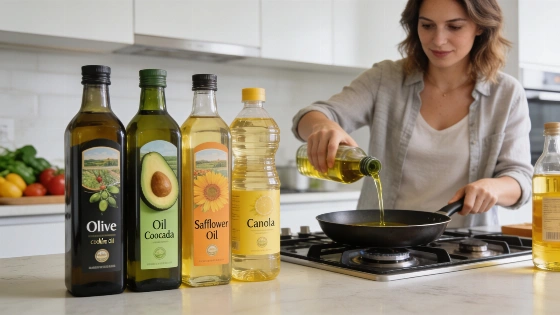
Forget the low-fat rules from the 90s. Now, the real question is which cooking oils actually help your health, and which ones quietly work against it. The oil you pick can make a difference for your heart and even your gut. So which bottles should stay on your counter, and which should only come out once in a while?
Extra-virgin olive oil typically contains 70-75% monounsaturated fat per serving, while canola oil delivers a high unsaturated-to-saturated fat ratio-both are fully disclosed on Nutrition Facts panels.
Oils that deliver real health benefits
Olive oil is a standout. It's packed with monounsaturated fats, vitamin E, and polyphenols. Studies link it to lower heart disease rates and even better gut health. Extra-virgin olive oil has more polyphenols and a bold taste, so it's great for dressings or finishing a dish. For cooking, its smoke point is between 350 and 410°F (about 177-210°C). That works for sautéing, roasting, and baking, but not for deep frying at very high heat.
Avocado oil is another good pick. It's rich in monounsaturated fats and antioxidants. Its smoke point is usually above 480°F (about 249°C), and can go as high as 500-520°F if it's highly refined. That makes it a solid choice for high-heat cooking. Still, the research on avocado oil isn't as deep as it is for olive oil. Olive oil has decades of strong data behind it; avocado oil is newer on the scene.
Safflower oil comes from the safflower plant. It has both monounsaturated and polyunsaturated fats, with a good dose of linoleic acid. Some studies show safflower oil can help shrink waist size, lower blood pressure, and improve insulin resistance in people with metabolic syndrome. It tastes neutral and has a high smoke point, so it works well for stir-fries, baking, and marinades.
Canola oil gets a lot of criticism online, but the science doesn't support the fear. It's low in saturated fat and high in unsaturated fats, including some omega-3s. That's why it shows up in many official nutrition guidelines. Research finds canola oil can lower LDL ("bad") cholesterol and improve the balance of good to bad cholesterol, without raising inflammation. It's affordable, has a high smoke point, and tastes neutral. If you're worried about seed oils, know that major health groups do not tell people to avoid them as a group. The main advice is to swap saturated fats for unsaturated ones whenever you can.
Oils that are best used sparingly
Some oils sound healthy but aren't right for everyday cooking. Flaxseed oil is high in omega-3s and polyunsaturated fats, but it has a low smoke point. It's best for salad dressings or drizzling on food, not for heating on the stove.
Palm oil comes from plants, but about half its fat is saturated. Cutting back on saturated fat is still recommended to lower heart disease risk. There are also environmental issues with palm oil, though some companies are trying to produce it more sustainably.
Walnut oil has many of the same healthy fats as whole walnuts, which are linked to benefits for the heart, brain, and gut. But walnut oil doesn't hold up to heat and spoils quickly. It's best for cold uses like salad dressings. If you buy it, keep it in the fridge to make it last longer.
Making smarter choices with fats
If you want to eat better, the kind of fat you use matters as much as the amount. The Dietary Guidelines for Americans say to keep saturated fat to about 10% of your daily calories. Swap out saturated fats-like coconut oil, butter, and fatty meats-for unsaturated fats from plant oils, avocados, and nuts. This can help lower your risk of heart disease.
Omega-3 fats are another key. You'll find them in some oils and especially in seafood. Most Americans don't get enough. Aim for two servings of seafood a week to get enough EPA and DHA. To boost healthy fats, snack on nuts, add avocado to salads, or use olives as a topping. Total fat should make up about 20% to 35% of your daily calories, but you don't have to get all of it from oils.
If you want more ideas for fighting inflammation, check out our recent feature on seasonal produce with anti-inflammatory benefits.
What this means for your kitchen
The oil you use isn't just about taste or price. It can shape your health over time. The research points to oils high in unsaturated fats-like olive, avocado, safflower, and canola-as the best picks. Use oils high in saturated fat or with low smoke points less often. No single oil will make or break your diet, but reaching for the right ones most of the time can help your heart and lower inflammation. The smartest move is to match your oil to how you cook, what you like, and what you can afford. Build your meals around whole foods, lean proteins, and lots of vegetables, with healthy fats as a steady part of the mix.