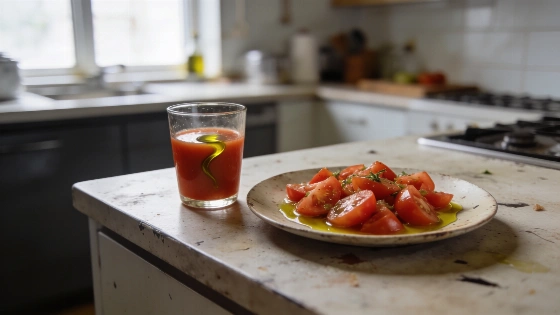
The evidence behind the drink comes from studies of ingredients and broader diets, not trials showing that a concentrated shot works better. Tomatoes contain lycopene, and fat helps the body absorb it. The shot format itself has not been shown to add benefits.
That distinction matters for shoppers weighing a functional drink or a recipe marketed as a health shortcut. A plausible nutrient pairing does not prove that a concentrated dose works better. The amount of each ingredient and the claim attached to it matter as much as the ingredient list.
The FDA's qualified claim refers to about 20 g of high-oleic oil daily replacing saturated fat without adding calories-not to a tomato-and-oil shot.
Why tomatoes and olive oil go together
Lycopene gives tomatoes their red color. Research has examined links between lycopene-rich foods and health outcomes, but it does not establish that a tomato-and-oil shot prevents disease. Studies vary in design. Many assess foods within broader eating patterns rather than as a daily shot.
Olive oil supplies monounsaturated fat that can help the body absorb lycopene. Heating tomatoes with olive oil may improve absorption further by helping release lycopene from the tomatoes' cell walls. The pairing is familiar in Mediterranean-style meals, from salads to pasta sauces. It also appears in soups.
Some evidence supports an overall dietary pattern that includes olive oil, but it does not validate a concentrated drink. In PREDIMED, researchers followed 7,447 adults ages 55 to 80 at high cardiovascular risk for an average of 4.8 years. A Mediterranean diet supplemented with olive oil was associated with about 30% fewer major cardiovascular events than the comparison diet. The results were retracted and republished in 2018 after randomization issues were found at two of 11 sites. Reanalysis produced similar conclusions. The trial tested a dietary pattern, not a daily shot, according to the republished PREDIMED report.
Claims Check: Evidence for olive oil is strongest when it replaces fats higher in saturated fat or is part of a Mediterranean-style eating pattern. Neither those findings nor short-term changes in markers such as blood pressure establish that a tomato-and-oil shot prevents heart attacks or strokes.
What the shot leaves out
A large observational study followed 60,582 women and 31,801 men from 1990 to 2018. Consuming more than 7 g of olive oil per day was associated with a 19% lower risk of death from any cause compared with rare or no consumption. The association was strongest when olive oil replaced butter, margarine, mayonnaise, or dairy fat. Researchers found no significant reduction when comparing it with other vegetable oils. This kind of study can identify an association, but it cannot show that olive oil or a shot caused the difference.
The FDA allows a qualified health claim for oils high in oleic acid: about 1.5 tablespoons, or 20 g, a day may reduce the risk of coronary heart disease. The agency emphasizes that evidence is limited and not conclusive. The oil must replace fats high in saturated fat without increasing total calories. That is a substitution-based claim, not a recommendation to add an extra serving, according to the FDA's qualified-claim guidance.
Short-term randomized studies of olive oil, generally lasting about 4 to 12 weeks, have reported small improvements in measures such as blood pressure and blood-vessel function. They did not establish fewer heart attacks or strokes. Extra-virgin olive oil contains polyphenols, but a product's polyphenol content or a broad "antioxidant" claim does not by itself demonstrate a clinical benefit from a particular serving format.
For a bottled shot or recipe, check serving size and calories on the Nutrition Facts panel. Then look at added sugars and sodium, and check how much olive oil the serving actually contains. Functional drink mixes deserve the same scrutiny. Oil is calorie-dense, so adding it on top of usual meals differs from using it in place of another fat. If a product uses a proprietary blend, the total blend weight does not reveal the exact amount of each ingredient. A general "detox" or "heart health" claim cannot fill in that missing information.
Lemon-and-olive-oil shots circulate online with claims about detoxing or cleansing the liver. The clinical evidence described here does not support those claims. Tomatoes bring lycopene, and fat can aid its absorption. That makes the pairing nutritionally plausible, not a liver cleanse or health remedy.
For anyone who enjoys the flavor, tomato juice can have a sodium level that fits their needs. Olive oil can be added in a portion that makes sense for the overall diet. Neither ingredient on its own prevents disease. Neither treats or cures it.