
Apigenin is one of several parsley compounds researchers have tested in cells and animals. Those studies have reported effects such as cell death and slower cancer-cell growth. They do not show that eating parsley has the same effects in people.
That is not proof. Whether parsley is a garnish or part of a greens powder, capsule, or functional drink mix, its presence on a label does not establish a meaningful dose or a health benefit. Check for clearly listed amounts instead of relying on a broad blend name.
A parsley or greens-product label should disclose the amount of each relevant ingredient to show its individual dose. If parsley or apigenin is included only in a proprietary blend, the blend weight does not reveal how much of either ingredient is present.
What parsley's compounds may do
Parsley contains apigenin, a flavone studied for potential anticancer activity. Cell and animal studies have reported effects such as cell death and slower cancer-cell growth, but the findings are preliminary. They do not show that eating parsley has the same effects in people.
The herb also contains other flavonoids, including quercetin and myricetin, as well as vitamins. Researchers have studied these compounds for antioxidant and anti-inflammatory properties. That research does not establish that parsley prevents cancer. For a powdered greens blend or supplement, check whether the label lists each ingredient's amount in Supplement Facts or keeps it inside a proprietary blend.
Claims Check: A parsley or apigenin ingredient on a supplement label does not establish cancer prevention. FDA rules do not allow dietary supplements to claim that they diagnose, treat, cure, or prevent disease without meeting the applicable requirements.
Parsley may also have a practical use at the grill. Cooking meat at high temperatures, including grilling and pan-frying, can form heterocyclic aromatic amines (HAAs). Some of these compounds are considered potential carcinogens. Research suggests that antioxidant-rich herb marinades may reduce the formation of some HAAs. That does not mean parsley removes all risk. Available search results did not provide suitable independent evidence for a parsley-specific protective effect.
Use parsley without overstating it
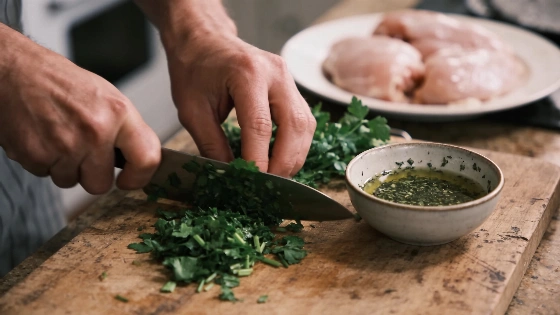
Add fresh parsley to sauces such as chimichurri, gremolata, or pesto, or use it in a marinade for chicken, fish, or other proteins. A sauce can put more of the herb in a meal than a garnish. But there is no established cancer-prevention dose. Dried parsley is another convenient cooking option. Supplements and powdered blends are different products, so check the serving size, ingredient amounts, and cost per serving. Do not assume they deliver a proven benefit.
For cancer risk, parsley should not distract from established prevention and screening guidance. IARC materials note that vaccination against hepatitis B can help prevent many cases of liver cancer. They also note that breast screening can help detect cancer earlier. Neither measure is evidence that parsley has a protective effect. The NCI prevention guidance is a more useful starting point for broader risk-reduction information.
Parsley has a modest but useful role: it adds flavor and plant compounds, and it can make a plant-forward meal or marinade easier to build. Use it if you enjoy it, but don't treat a food or supplement claim as a substitute for broader health measures. Parsley is a flavorful extra, not a proven cancer-prevention strategy.
For practical help building balanced meals, readers can also use these grocery meal shortcuts as a guide to convenient staples.