
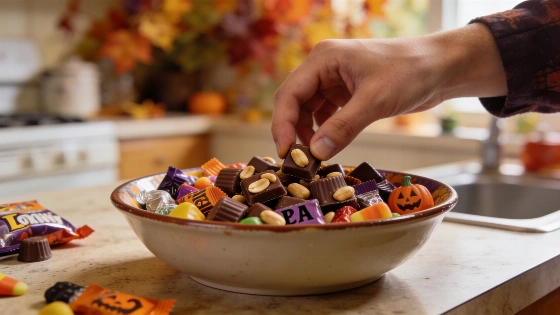
Rose Britt told USA Today that peanuts may add protein and fat to a Halloween treat. She says that could make Peanut M&M's more filling than sweets made mostly of sugar. It is a comparison, not a claim that candy is healthy.
Britt called the candy "not a whole balance" but said it may offer "a little more sense of fullness" than traditional sugar-only options. Dietitians Karen Donaghy and Oliva LaRosa also suggest looking for Halloween treats with ingredients that provide protein or fiber. That is the distinction.
Label check: compare serving size, calories, total sugars and Added Sugars-not just the candy name. Peanuts add protein and fat, but that does not make the product a balanced meal.
What can make candy more filling
Peanut M&M's are not the only nut-based option Britt mentioned. Reese's Peanut Butter Cups and Snickers also contain nuts or peanut butter, so they are more complex choices than straight-sugar candy. If chocolate is not appealing, Britt points to Smarties as a relatively low-calorie sugary option. "More filling" refers to a possible difference in how satisfied someone feels. It does not mean the candy is low in sugar or nutritionally equivalent to a meal replacement shake.
Compare products on the Nutrition Facts panel using the same serving size. The FDA's 50-gram Daily Value for added sugars is based on a 2,000-calorie diet. It is a reference, not an individualized target. The label's Added Sugars guidance explains how to read that figure. Check the serving size, too. A package may contain more than one serving, so the listed numbers may not cover everything eaten.
Claims Check: The FDA's 50 g Daily Value for added sugars is a labeling reference for a 2,000-calorie diet, not a personal allowance or a claim that a food is healthy. The American Heart Association uses stricter daily limits-about 36 g for men and 25 g for women-so a candy choice can be compared against more than one useful benchmark.
The American Heart Association's figures work out to about 9 teaspoons, or 36 grams, for men and 6 teaspoons, or 25 grams, for women each day. Those limits help put a few pieces of candy in perspective. Even a relatively filling choice is still a sweet to enjoy in moderation.
Read the label and choose what you enjoy
Check the ingredient list and Nutrition Facts panel for a quick comparison. Ingredients appear in descending order by weight, so the first items make up the largest share of the product. Peanut M&M's packaging lists peanuts and nutrition information. Compare the serving size, calories and sugars with other candies, and check the package in hand because values can vary by product version and market. Shake Nutrition's honey and agave comparison uses the same label-first approach to compare sweeteners.
Dark chocolate is another option. Donaghy and LaRosa say it typically contains less sugar than milk chocolate and provides flavanols, compounds associated with cardiovascular health. Registered dietitian Mira Ilic told Cleveland Clinic, "The darker the better!" She recommended chocolate with 70 to 85 percent cocoa. Cocoa percentage alone does not show how much added sugar is in a serving. Check the panel instead of relying on a claim on the front of the package.
Donaghy and LaRosa also advise people not to skip a favorite Halloween candy altogether. Eating what you actually like may be more satisfying than trying to avoid it. The American Heart Association recommends having a healthy meal before trick-or-treating to curb the urge to snack excessively. Parents can also suggest the "Switch Witch" idea: trade some excess candy for a toy and keep a few favorites.
The point is not to find a guilt-free candy. Peanut M&M's may keep you feeling full longer than straight sugar, but peanuts do not turn them into a meal replacement or a protein snack. Check the serving size and added sugars. Compare the labels, then make room for the treat you actually want.