
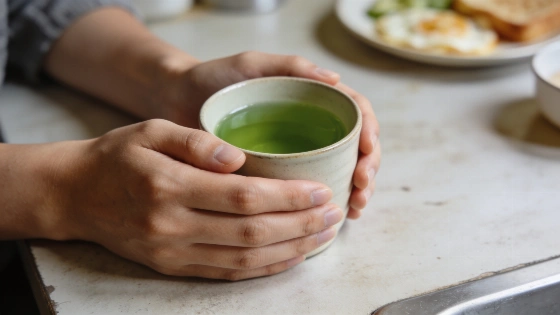
A 12-fluid-ounce serving of green tea contains about 37 milligrams of caffeine, though the amount varies with the tea and brewing method. Drinking it in the morning leaves more time for caffeine to wear off before bed. There is no proven magic hour, and evidence for heart-health benefits remains limited.
Green tea contains catechins, including EGCG. Researchers are studying their possible effects on blood vessels and blood lipids. That does not make every green tea powder or extract a proven heart-health product.
A 12-fluid-ounce serving of green tea contains about 37 mg of caffeine, though the amount varies with the tea and brewing method. Check a packaged drink's Nutrition Facts or a supplement's Supplement Facts rather than assuming all green tea products provide the same amount.
Why timing can matter
Caffeine can make it harder to fall asleep or stay asleep. Larger doses closer to bedtime tend to have a greater effect. The American Heart Association recommends seven to nine hours of sleep each night. Short sleep is linked with a higher risk of high blood pressure and stroke, as its sleep guidance explains.
Morning is a practical choice. It is not proven to prevent heart disease, but it leaves more time between caffeine and bedtime.
Caffeine can briefly and modestly raise blood pressure. This effect may be more pronounced in people who are not used to caffeine or who have high blood pressure. Consider your total caffeine intake from tea, coffee, energy drinks and functional drink mixes. A product's "natural energy" or "clean energy" wording does not tell you how much caffeine it contains.
Claims Check: Reviews of green tea research report small reductions in total and LDL cholesterol, but there is no convincing evidence that drinking green tea reduces cardiovascular events. Catechin or EGCG content on a product label is not, by itself, proof of a heart-health benefit.
When you drink a morning beverage can shape your routine. See this coffee routine guide.
What to know about catechins and daily habits
Some research suggests green tea catechins may affect cholesterol. But the clinical evidence is limited, and it does not show that tea prevents heart disease. When comparing products, tell brewed tea apart from concentrated extracts and powdered drink mixes. Check the serving size and caffeine amount. Look for the extract or catechin amount if the label lists it, and see whether the blend gives amounts for each ingredient. A proprietary blend may list only its total weight, without showing each ingredient's dose.
Brewed tea is a straightforward choice. It avoids the concentrated doses found in some supplements. High-dose green tea extracts have been linked to rare cases of liver injury. For powders and ready-to-drink mixes, check added sugars and serving size too. Claims such as "detox," "clean energy" or "heart support" do not prove a clinical benefit. Sweeteners and other mix-ins can change the nutrition profile.
Two cups are not a prescription. Unsweetened green tea can fit into a varied diet, but it should not replace prescribed treatment for high blood pressure or cholesterol. Catechins may interact with some medications. If you take medication, ask a healthcare provider or pharmacist about a specific product.
Morning is a sensible default if you want green tea without caffeine too close to bedtime. Timing cannot turn limited evidence into a treatment. Whether you choose loose tea, a bottled drink or a powdered mix, check the label for caffeine, serving size and added sugars. Treat health claims as claims to assess, not proof.