
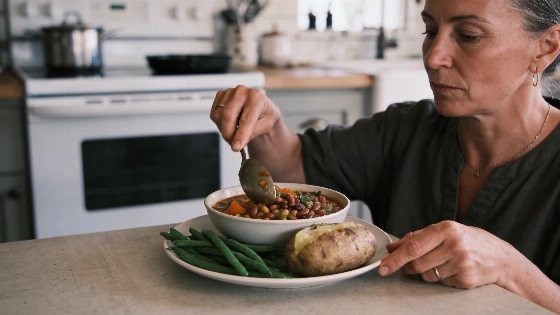
Muscle loss can accelerate with age. Meals built around familiar foods can help women over 50 make room for protein and fiber without relying on special ingredients.
A roast, stew or lentil soup can put protein on the plate. Vegetables and beans add fiber. Muscle strength supports mobility and independence. Dinner can do more.
For a generally healthy older adult, a commonly discussed protein range is about 1.0-1.2 g per kilogram of body weight daily. For a 150-pound woman, that is roughly 68-82 g per day-not a universal prescription.
A familiar plate with a modern purpose
A plate with protein, a vegetable and a starch can make a satisfying, balanced meal. Roast chicken with green beans and a baked potato is one example. Eating starch with protein and vegetables may support a steadier post-meal blood-sugar response than eating starch alone.
Protein needs depend on body size, health and activity. The basic adult reference intake is about 0.8 g per kilogram daily. Guidance for healthy older adults often discusses a higher range, roughly 1.0 to 1.2 g/kg, to account for age-related muscle loss. For a 150-pound woman, that comes to about 68-82 g over the day. It does not mean every meal needs a shake or an oversized serving of meat. Anyone with kidney disease or another chronic condition should ask a clinician before deliberately increasing protein.
A protein powder or ready-to-drink shake can be convenient when food does not fit someone's routine. But the promise on the front of the package is only part of the story. Check serving size, protein grams, calories, added sugars, allergens and protein source. Work out the price per serving using the container price and the stated number of servings. If a blend lists ingredients but not their amounts, shoppers cannot tell how much of a featured ingredient it contains. A shake sold as a meal replacement also needs a closer look at its full nutrition profile, not just its protein grams. The FDA explains how to read the Nutrition Facts label.
Claims Check: A randomized trial program has examined daily prune intake in postmenopausal women, including a study using about 100 g per day for 12 months. Those findings are specific to the studied group and dose; they do not establish prunes as a treatment for osteoporosis or a substitute for medical care.
Oatmeal is another easy staple. Oats contain soluble beta-glucan, a type of fiber associated with lower LDL cholesterol. An often-cited amount for this effect is about 3 g of beta-glucan a day from oats or barley. The amount in a bowl depends on the product and portion, so check the package. Not every oat-based breakfast provides that dose. EFSA's beta-glucan assessment reviews the evidence behind the cholesterol claim. Fruit, nuts, seeds or yogurt can make breakfast more substantial. Beans add protein and fiber to soups and stews.
Keep the comfort and update the details
Prunes may support bone health in postmenopausal women. But the research does not make them a replacement for calcium, vitamin D, resistance training or medical care. An earlier dinner may fit some people's routines. It should not be treated as a guaranteed fix for sleep or hormone changes.
Updating old recipes can be simple. Add non-starchy vegetables, then use herbs, garlic, onions, lemon or vinegar for flavor. Serve fish such as salmon alongside poultry, beef, tofu or lentils. Olive or avocado oil can replace shortening. Butter can still fit in moderation, with the overall eating pattern and portion in mind. For more on that trade-off, see this butter and cholesterol guide.
Grandma-core works best as a flexible template, not a rulebook. A pot of stew, a bowl of oatmeal or beans added to dinner can make balanced eating feel familiar and manageable. Practical meals come first. Recipes can still change to meet current needs.