
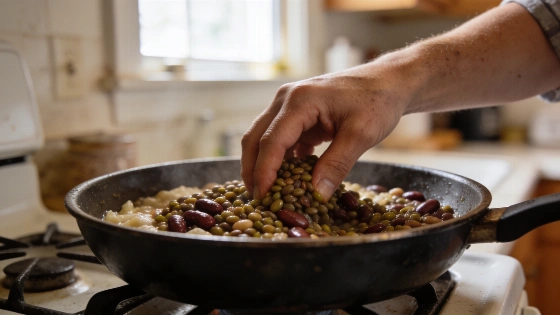
More than 46,000 U.S. adults took part in the survey data analyzed by two William & Mary students. The researchers found a link between pulse intake and cardiometabolic disease risk. It was a population-level association, not a prediction of any one person's risk.
The study counted heart disease, stroke and diabetes as cardiometabolic disease, or CMD. Researchers analyzed existing survey data. They did not assign people to change their diets, so the findings do not show that pulses caused the difference or prevent heart attacks.
When comparing pulse-based powders, check serving size, protein, fiber, calories, sodium and added sugars on the Nutrition Facts panel. A blend's total weight does not tell you how much of each ingredient it contains.
What the student researchers found
Tara Kamalakantha '28 and Catherine Zavela '26 analyzed data from more than 46,000 adults who took part in the National Health and Nutrition Examination Survey between 1999 and 2018. Kamalakantha used linear regression models to study how pulse intake tracked with health outcomes.
The research took place in the Nutritional Epidemiology and Food System Analytics Lab, led by Associate Professor of Health Sciences Zach Conrad. The Pulse Crop Health Initiative at the U.S. Department of Agriculture funded the work.
The main finding was a modeled association: one extra daily serving corresponded to 19% lower overall CMD risk. That does not mean an individual's absolute risk falls by 19 percentage points. Nor does it show that adding a serving would have the same effect for everyone.
U.S. adults consumed less than 0.37 ounces of pulses per day on average, Kamalakantha said. The analysis appeared in the peer-reviewed journal Current Developments in Nutrition.
Association is not a prescription
Other differences in people's diets and lives could help explain the link. So the 19% estimate is a research signal, not a guaranteed benefit or a recommended serving size. A separate French cohort study of preservative intake also found associations, not proof of cause. This cardiovascular review explains that study.
Controlled trials answer different questions from this survey analysis. Reviews of randomized trials have found improvements in some lipid measures, blood pressure and inflammation markers among people who consumed pulses. A typical amount in the studies was about 150 grams of cooked pulses per day.
One review of controlled trials found an average LDL-cholesterol reduction of about 0.14 mmol/L, or 5.4 mg/dL, compared with diets without pulses. These modest changes in risk markers do not prove that pulses reduce heart attacks or strokes. Readers can explore the PubMed trial literature and compare foods using USDA FoodData Central.
Whole pulses and powders are not interchangeable
Pulses are edible seeds from legume plants. They include dry beans, chickpeas, lentils and dry peas. As whole foods, they can provide fiber and other nutrients. But the study did not test protein powders, meal replacements or functional drink mixes.
A shake that lists pea protein or a proprietary "superfood" blend should not claim the study's 19% association as a product benefit. The research did not test those products.
For powdered products, shoppers can use the label to compare serving size, protein and fiber. It also shows calories, added sugars and milligrams of sodium per serving. Check whether the protein comes from pea, another plant source or a mixture. Compare cost per serving, too. Front-of-pack phrases such as "heart healthy" or "clean" do not give the full picture.
A blend's total weight may not show how much of each ingredient it contains. Check the Nutrition Facts panel.
The American Heart Association's broader dietary guidance calls for an overall eating pattern that includes vegetables, fruits, whole grains, nuts, legumes, fish and unsaturated fats. It also advises limiting excess salt, sugar and ultra-processed foods. Pulses are one food option, not a stand-alone preventive treatment. They are no reason to ignore the rest of a product's Nutrition Facts panel.
A realistic food choice to consider
Kamalakantha's practical point is modest: people can add beans, lentils, chickpeas or peas over time. The study is not a reason to cut out other foods. It does not prescribe a particular meal or set a serving target for disease prevention.
Zavela had worked on the project for several years, including earlier lab research on pulse-intake trends. The paper was published in May. After publication, Kamalakantha presented the findings to the American Society for Nutrition and won first place in its Early Career Poster Competition. She is now studying pulses in relation to environmental sustainability, diet costs and social outcomes.
The study does not show that pulses prevent heart disease or diabetes. It does offer a reason to consider eating beans, lentils, chickpeas or peas more often. These foods are underconsumed in the U.S., and higher intake was associated with lower CMD risk in a large national dataset.
Keep the finding in perspective. A powder or shake does not have the same evidence as the whole foods studied.