
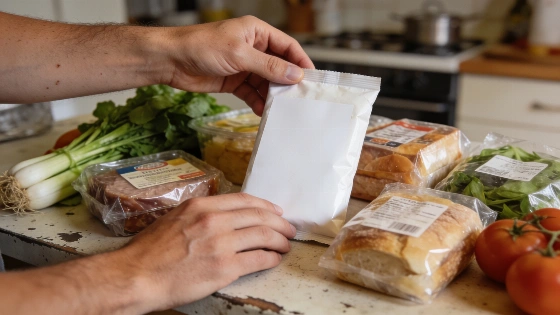
The NutriNet-Santé cohort tracked 112,395 adults for a median of 7.9 years. Among people with the highest intake of non-antioxidant preservatives, researchers found a 29 percent higher risk of hypertension and a 16 percent higher risk of cardiovascular disease than among those with the lowest intake. These are relative differences in an observational study, not a prediction of an individual shopper's risk.
Researchers recorded 5,544 cases of hypertension and 2,450 cardiovascular events. The study appeared in the European Heart Journal on May 20, 2026. It examined a broad range of preservatives and cardiovascular outcomes.
An ingredient list can show that an additive is present, but it does not necessarily disclose its amount. This study estimated exposure from reported diets; it did not test a particular shake, scoop, or Supplement Facts panel.
What the study found
Researchers estimated preservative exposure from foods participants reported eating. They then compared those estimates with health outcomes. Higher intake of antioxidant preservatives was also associated with a 22 percent higher risk of hypertension. The group-level results do not mean every additive in a group had the same association.
The additives examined included potassium sorbate, sodium nitrite, ascorbic acid, sodium ascorbate, citric acid, potassium metabisulphite, sodium erythorbate, and rosemary extracts. Ascorbic acid is also known as vitamin C. Researchers counted it here when it was used as a food additive, not when it came from other sources. The results do not establish that each named additive was individually associated with the outcomes.
That distinction matters when you check a ready-to-drink shake, powdered meal replacement, protein powder, or functional drink mix. The FDA's ingredient overview explains the role of food ingredients and additives. An ingredient's presence on a label does not, on its own, show that it is harmful at the amount consumed.
Claims Check: This cohort found statistical associations after adjustments for several diet and lifestyle factors, but it cannot show that preservatives caused hypertension or cardiovascular disease. It also does not support treating every named additive as a proven hazard or as a reason to avoid all preserved foods.
How to read the findings alongside a product label
This was an observational study. Participants were not assigned diets containing particular preservatives. Other features of their diets or lifestyles may help explain the associations, even after statistical adjustments. The authors described the results as associations, not proof of cause.
Start by separating what a label says from what a marketing claim suggests. An ingredient list names additives. The Nutrition Facts or Supplement Facts panel gives details such as serving size, calories, protein, and sugars. The NIH guide to supplement labels explains how to read supplement information. A proprietary blend may show the blend's total weight without listing each ingredient's individual amount.
Check serving size in grams before you compare protein powders or meal replacements. Then compare calories, protein, and price per serving. More protein per scoop does not automatically mean better value if the scoop is much larger or the price per serving is higher. Protein source, added sugars, sweeteners, dietary fiber, allergens, and certifications such as Vegan or Kosher are separate label details. The study did not test them.
Claims such as gut health, detox, immune support, or clean energy do not prove themselves. Check which ingredients are disclosed, whether amounts are listed, and whether relevant clinical evidence supports the claim. This cohort did not test those claims. It did not establish that a shake or supplement prevents or treats disease.
The results apply to adults enrolled in NutriNet-Santé and the dietary patterns represented in that cohort. The study does not establish that the same associations apply to every population. It also does not show that a particular protein powder or ready-to-drink shake contributed to the findings. The ingredients studied are used in processed foods, but the paper does not call for a ban on any specific additive.
The measured takeaway is to study preservative exposure in the context of overall dietary patterns. A single ingredient name is not a cardiovascular verdict. For product decisions, compare the full label: serving size, protein and calorie amounts, added sugars, ingredient disclosures, and price per serving. Treat broad wellness language as a claim to assess, not as evidence.
A separate UK diet analysis also reported associations. It did not prove that a particular diet or supplement caused the observed health differences.