
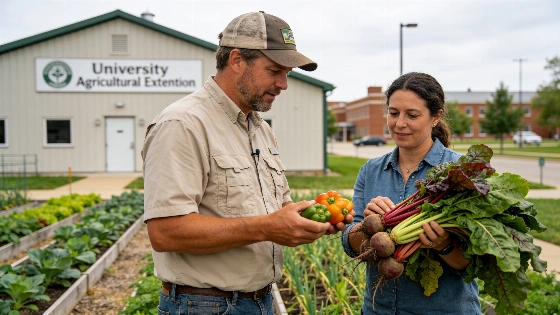
The center is planned for the Doris Kelley Christopher Illinois Extension Center. The University of Illinois says it will connect food-systems research with farmers and communities seeking access to high-quality food. For shoppers who judge nutrition by a product label, the distinction matters. This is not a new shake, meal-replacement formula or supplement.
University of Illinois Extension and the College of Agricultural, Consumer and Environmental Sciences (ACES) announced the Center for Food Systems, Nutrition Security, and Health Integration as a statewide strategic hub. Its stated focus includes research, innovation, leadership and collaboration across food systems, nutrition security and public health. A public opening was planned for September 24, 2026. No product is described.
No Supplement Facts panel, serving size, nutrient quantities, ingredient list or product dosage is provided in the center announcement. It describes an institutional initiative, so there are no product-level metrics to compare or verify.
A coordination hub, not a nutrition product
Executive Director Jennifer McCaffery said the goal is to bring separate efforts together and connect researchers, farmers and communities. The proposed center is a partnership model, not simply a place to discuss nutrition. It is planned for the Doris Kelley Christopher Illinois Extension Center, which links the initiative to Extension's existing campus infrastructure.
The broader context predates this announcement. In March 2022, Illinois Extension published material about USDA's path to nutrition security through its nutrition education programs. Its Health Insights Illinois content also offers food, recipes and ideas for a healthy lifestyle. These efforts help explain the center's educational setting. They do not establish which programs the new hub will deliver.
Claims Check: The announcement sets out a mission and a planned opening, not measured results. As with a nutrition shake marketed for immune support or gut health, a stated goal is not proof of an outcome; evaluation requires clearly defined measures and evidence collected from programs in practice.
What the announcement establishes, and what it does not
The center may eventually help coordinate applied research and programs for communities. But available reporting does not confirm a dedicated budget, a partner count, launched programs or improved access to healthy food. For now, it is a developing initiative, not evidence that nutrition security has improved.
The distinction matters when shoppers assess nutrition products, too. Front-of-pack language on a shake cannot replace its Nutrition Facts or Supplement Facts panel. Check the serving size, calories, protein grams, added sugars, allergens and listed protein source. The NIH consumer guide explains label and safety considerations for supplements. Those checks are separate from assessing whether a community program improves food access.
For now, the center's stated role is to bring research, food production and community nutrition work into closer coordination. Its longer-term value depends on which partnerships and programs launch, how their results are measured, and whether those results show practical benefits for the communities the initiative aims to serve.