
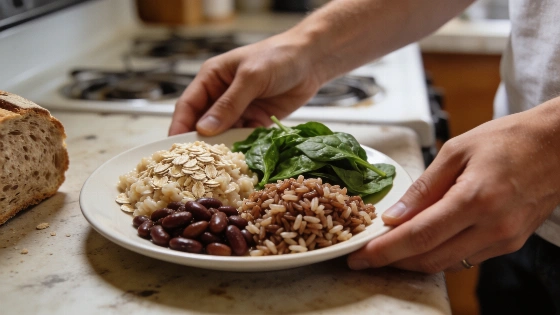
The review pooled 87 randomized trials. It linked higher whole-grain intake to a small reduction in systolic blood pressure, along with changes in other health markers.
The review's strongest reported intake range was about 60-100 g of whole grains daily, often described as roughly four to six servings. A Nutrition Facts panel's fiber number alone does not tell you how much whole grain a product contains.
What the whole-grain evidence reports
Published in the European Heart Journal, the analysis linked higher whole-grain intake to a mean systolic blood-pressure reduction of 0.82 mm Hg. It also reported improvements in LDL cholesterol, triglycerides and fasting glucose. The change in blood pressure was modest. It does not show that whole grains alone treat hypertension.
The review rated changes in body weight, waist circumference, total cholesterol and interleukin-6 as high-certainty findings. Evidence for LDL, triglycerides, systolic pressure, fasting glucose and insulin resistance was rated moderate. These ratings matter. A favorable result across studies does not guarantee the same outcome for each person.
The reported daily range was 60 to 100 g of whole grains. Coverage often describes that as about four to six servings, but serving sizes depend on the food. A slice of whole-grain bread, cooked oats, brown rice and a ready-to-drink shake are not equal measures. USDA's whole-grain guidance can help shoppers compare grain choices. For packaged products, check the ingredient list as well as the Nutrition Facts panel.
That check can help with shakes and bars sold as "whole grain," "high fiber" or "gut health." Look for grain ingredients you can identify, such as oats or whole-wheat flour. Check serving size, fiber and added sugars, too. A high fiber number alone does not show that a product contains much whole grain. A protein powder's protein-to-calorie ratio tells you nothing about its grain content.
Why sodium is only part of the picture
A separate July 2026 report from the University of Vermont says hypertension guidance should consider adequate potassium intake alongside lower sodium intake. It does not call for dropping sodium limits. Naomi Fukagawa described the approach as holistic. Food components interact, and overall dietary patterns matter.
Foods that provide potassium include bananas, potatoes, beans, spinach and yogurt. The NIH potassium fact sheet explains why personal circumstances matter: kidney function and medications can affect potassium needs and safety. Potassium supplements can be risky for some people, including those taking certain blood-pressure medicines. Talk with a clinician before taking one based on a product claim.
For shake shoppers, "potassium added" is a label detail, not a blood-pressure plan. Check the amount per serving, serving size and other ingredients. Consider the rest of your diet, too. A shake may provide nutrients, but it is not a substitute for individual medical advice or a balanced diet.
How this fits with DASH and medical care
The DASH diet includes vegetables, fruits, whole grains, lean proteins and low-fat dairy. It also sets sodium limits. Common guidance sets a daily limit of 2,300 mg, with 1,500 mg as a lower target for some people. A 2023 review in Cureus also reported that DASH benefits blood pressure and other cardiovascular risk markers.
U.S. clinical guidance commonly defines high blood pressure as 130/80 mm Hg or above. Diet can help manage it, but some people still need medication. Food choices and clinical care are not competing options.
Track whole-grain servings and read product labels. Do not assume claims such as "superfood," "clean energy" or "metabolism support" prove a health effect. Compare the ingredient list, serving size, fiber, added sugars and protein amount. Also distinguish a conventional food's Nutrition Facts panel from a supplement's Supplement Facts panel. Discuss blood-pressure readings and dietary changes with a clinician. The research makes whole grains and a balanced approach to sodium and potassium relevant to that conversation. Treatment decisions belong with the patient and care team.