
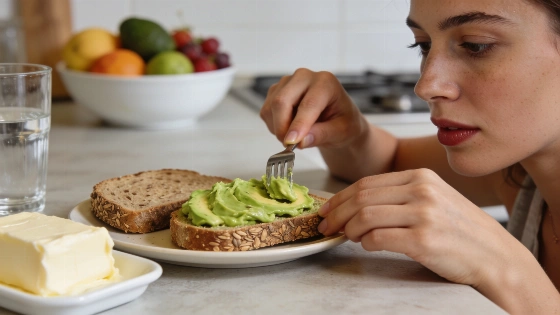
Most people reach for butter or cheese without thinking. But new research points to a different choice for heart health: avocado. Over 110,000 adults were tracked for 30 years. Those who ate at least two servings of avocado each week had a lower risk of heart disease. The numbers get sharper when you swap just half a serving of saturated fat-like butter, margarine, cheese, or processed meat-for avocado. That switch cut cardiovascular events by 16% to 22%.
This isn't just a fluke. Avocado's benefits come from what's inside. Butter and cheese are packed with saturated fat. Avocado is different. Half an avocado has 15 grams of fat, but most of it is monounsaturated. That's the kind of fat that helps lower cholesterol. Johannah Katz, M.A., RD, puts it simply: "Replacing foods higher in saturated fat with avocado may help improve cholesterol levels, and higher avocado intake has been associated with a lower risk of cardiovascular disease."
A half avocado provides about 7 grams of fiber-nearly a quarter of the Daily Value-and most of its 15 grams of fat are heart-healthy monounsaturated fats, not saturated fat.
Why avocado beats old-school fats
Avocado feels creamy like butter. But that's where the comparison ends. The monounsaturated fats in avocado help lower LDL cholesterol and improve blood lipids. That's good for your heart. Avocados also bring antioxidants and fiber. These protect LDL cholesterol from oxidation. Less oxidation means less plaque in your arteries.
Fiber is where avocado really shines. Half an avocado gives you almost 7 grams of fiber. That's about 24% of what you need each day. Talia Follador, RDN, LDN, explains: "The fiber helps to lower blood levels of 'bad' LDL cholesterol." About 30% of this fiber is soluble. It forms a gel in your gut, binds to bile acids, and helps your liver pull cholesterol from your blood. The result is lower LDL cholesterol and steadier blood sugar. Most Americans don't get enough fiber. Swapping out fiberless saturated fats for avocado is a smart way to close that gap.
Claims Check: While avocado is widely promoted for heart health, its benefits are supported by clinical evidence showing that replacing saturated fats with monounsaturated fats-like those in avocado-can lower LDL cholesterol and cardiovascular risk. However, no regulatory agency currently allows brands to claim that avocado or any single food can cure or prevent heart disease outright.
Potassium power: more than just sodium
Blood pressure isn't only about cutting salt. New studies show that getting more potassium may matter even more for blood pressure and stroke risk. Avocado helps here too. Half an avocado has 487 milligrams of potassium. That's 10% of your daily need. Follador says, "Potassium helps to keep blood pressure in a healthy range by helping to relax blood vessels and helping your kidneys flush out extra sodium." In a study of over 67,000 women in Mexico, those who ate five or more servings of avocado per week had a 17% lower rate of hypertension than those who rarely ate it.
Potassium, fiber, and plant compounds like phytosterols make avocado a real contender for heart health. Try avocado on sandwiches instead of mayo or cheese. You get a potassium boost and more. These swaps aren't just theory. They're backed by real data and nutrition science.
Other foods that help your heart
Avocado isn't the only food that works for your heart. Nuts are loaded with monounsaturated fats, B vitamins, magnesium, potassium, vitamin E, and fiber. Eating an ounce of nuts daily links to a 21% lower risk of heart disease. Edamame brings potassium, fiber, and soy isoflavones, which are tied to lower heart risk. Fatty fish-like salmon, anchovies, mackerel, sardines, and herring-supply omega-3s that lower triglycerides and cut cardiovascular risk. Swapping two servings of red meat for fatty fish each week is a smart move.
Want more ideas for blood pressure? Our earlier breakdown covers ten snacks that bring flavor without too much sodium or saturated fat.
How to make the swap
Switching out butter, cheese, or processed meat for avocado won't fix everything overnight. But it's a real step forward. Avocado's mix of monounsaturated fat, fiber, potassium, and plant compounds gives it an edge over old-school fats. Spread avocado on toast instead of butter. Add it to tacos instead of sour cream. Mash it into egg salad instead of mayo. These small changes add up. They protect your heart in meals you already love.
Avocado's rise from trendy toast to nutrition star didn't happen by chance. The evidence is strong. Making avocado a regular part of your diet-especially as a swap for saturated fats-brings real gains in cholesterol, blood pressure, and heart risk. If you care about your heart, avocado makes sense.
For a full look at avocado's nutrients, including fiber and potassium, check the USDA FoodData Central database. For clinical research on dietary fats and heart risk, see PubMed.