
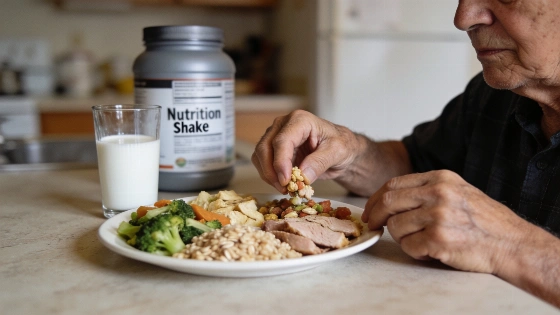
Appetite changes, trouble chewing or swallowing, chronic conditions and medication effects can make it harder for adults over 60 to get enough nutrition. Budget limits and eating alone can add to the problem. Needs vary.
A report on couples' eating habits describes how daily habits and circumstances can shape food choices. Lower calorie needs do not mean everyone should eat the same amount or automatically cut food.
A protein number on its own is incomplete label information: compare grams of protein with serving weight, calories and the rest of the nutrition panel. Check whether the product uses Nutrition Facts or Supplement Facts, and review the serving as prepared if you add milk or other ingredients.
Calorie needs vary
Federal dietary guidance gives daily calorie ranges of 1,600 to 2,200 for women age 60 and older, and 2,000 to 2,600 for men in the same age group. These are broad ranges, not personal prescriptions. Activity, body size, health and other circumstances affect a person's needs. The Dietary Guidelines for Americans presents calorie estimates as guidance, not a single target for every older adult.
Dr. Sarah Booth, director and senior scientist at the Jean Mayer USDA Nutrition Research Center on Aging at Tufts University in Boston, has noted that people generally need fewer calories as they age to maintain the same weight. The goal is not to eat as little as possible. Make each food choice count. The National Institute on Aging also recommends nutrient-dense foods such as vegetables, fruits, whole grains, lean protein foods and low-fat dairy in its healthy-eating guidance.
For shoppers considering a nutrition shake or powdered meal replacement, the words on the front of the package are only a starting point. Check serving size in grams, calories, protein, fiber, added sugars, and listed vitamins and minerals. Protein powder is not automatically a complete meal. Check what a product marketed as a meal replacement actually provides per serving. Preparation matters, too. Milk or other added ingredients change the final nutrition.
Protein is another reason to read the panel rather than rely on broad claims. The adult recommended dietary allowance is 0.8 grams per kilogram of body weight per day. Research and clinical guidance also discuss higher targets for some older adults, but needs depend on the person. A shake's protein content alone does not show that it will preserve strength or function. Check the protein source and amount per serving. Consider the overall diet and any relevant health issues.
Claims Check: The adult protein RDA of 0.8 grams per kilogram per day is a baseline, not proof that a particular shake will preserve muscle or meet an individual's needs. Products making muscle-support claims should be judged by their disclosed protein amount and the evidence for the claim-not by the claim wording alone.
Make each calorie count
When comparing products, check whether the label says Nutrition Facts or Supplement Facts. Look for disclosed amounts, not just the combined weight of a proprietary blend. That figure can hide how much of each ingredient is present. Check allergen statements, sweeteners and fiber sources, too. Sugar alcohols and added fibers such as inulin may not suit every digestive system.
Claims such as "detox," "gut health" or "immune support" do not prove a product works. The label should state which ingredients and amounts are meant to support them. Read the details.
Age-related changes in appetite, chewing, swallowing and digestion can make it harder to get enough nutrition, even when calorie intake seems adequate. A shake may be convenient when eating is difficult, but it does not address the cause of poor appetite or replace individual advice. Older adults who are losing weight without trying, struggling to eat or unsure how a product fits their needs can ask a clinician or registered dietitian for guidance.
Lower calorie needs are no reason to overlook nutrition. Judge foods and products by the nutrients they provide, not just their marketing or protein headline. Treat calorie ranges as general guidance, not personal targets. A clear label makes it easier to compare servings and decide whether a shake adds useful nutrition to the overall diet.