
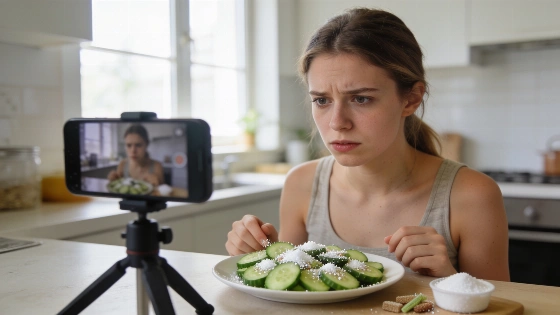
Open TikTok and you'll see a flood of so-called nutrition hacks. Some are just odd, others are flat-out wrong. Behind the viral clips and influencer confidence, there's a real problem: much of this advice isn't just unproven-it's misleading. Dietitians are raising red flags as untrained creators push strange food swaps and "detox" drinks, making it harder for people to figure out how to eat well.
Look at the claim that dipping cucumber in stevia is a good swap for watermelon. Dietitian Cara Harbstreet doesn't hold back: "If you really think this tastes the same, you're not quite right in the head." The issue isn't only taste. Watermelon gives you vitamins, minerals, and hydration. Cucumber with sweetener is mostly water and fake flavor. Harbstreet points to a bigger problem: "This madness is fueled by a cultural fear of carbohydrates and the foods that contain carbohydrates, including fruit, with its proven beneficial nutrients."
Many popular nutrition shakes and meal replacements now disclose protein purity (protein as a percentage of calories) and added sugar per serving, but some still hide ingredient amounts behind proprietary blends, making it difficult for shoppers to assess true nutritional value.
Then there's the cheese popcorn hack. The idea? Let cheese cubes sit out at room temperature for two days, then roast them to try to make something like popcorn. Nutrition expert Sam Previte is direct: "Stop it now, ugh!" She warns that young viewers might actually believe this is a healthy swap, when in fact, popcorn itself can fit into a balanced diet. Demonizing simple foods in favor of odd, untested swaps only adds confusion, not health.
The "detox" drinks are even riskier. One popular mix-pineapple, cucumber, lemon, and ginger-sounds fresh, but Previte calls the health claims "downright dangerous." She says influencers often push these drinks with no science behind them. Skipping a real breakfast for a juice like this means missing out on key nutrients like fat and protein. The risk isn't just being let down-it's missing what your body needs.
Official advice from the NHS and British Dietetic Association is clear. Fruit juice, vegetable juice, and smoothies should be limited to 150 ml per day, and only count as one of your 5-a-day. Bigger servings, like those in many juice "cleanses," can quickly go over the recommended free sugar intake and don't have the fiber of whole fruit. The BDA also points to the Scientific Advisory Committee on Nutrition's rule that free sugars should be no more than 5% of your daily energy. Many viral "detox" drinks blow past this limit. Most bottled juices and smoothies are two or three times the daily recommended amount, which can hurt metabolic health and weight goals. The British Dietetic Association sugar guidance breaks down these limits in detail.
These trends don't just pop up out of nowhere. They show a bigger social obsession with extremes-where "healthy" means restriction, thinness, and chasing perfection. Harbstreet says this is a sign of a warped attitude toward food. She warns that many of these videos show orthorexic habits and can send dangerous messages to people at risk for eating disorders. The recipes themselves rarely look good. Their popularity comes from a fake image of health, not real nutrition.
If you want real advice, here's the bottom line: TikTok is no replacement for qualified nutrition guidance. As shown in our reported earlier, even choosing between fresh, frozen, or canned produce takes real knowledge about nutrients and context-something a viral video can't give you.
The noise around nutrition on social media isn't just a harmless trend. When influencers with no science background push food swaps and miracle drinks, they can confuse the public about what healthy eating really means. The answer isn't in a trending hashtag. It's in evidence-based advice from professionals who know nutrition inside and out. If you want to eat well, skip the TikTok hacks and look for real expertise. Your health is worth it.