
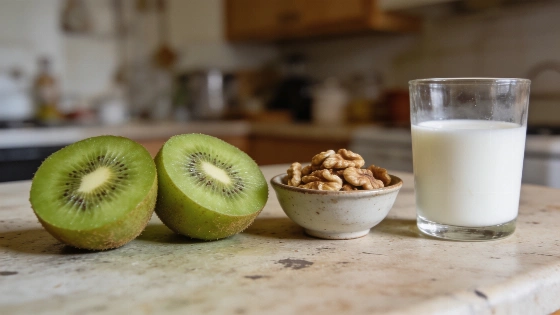
In one small trial, 24 adults with sleep complaints ate two kiwifruit about an hour before bed for four weeks. Researchers reported changes in several sleep measures, but no food guarantees an uninterrupted night.
Research on kiwi, walnuts, tart cherry juice, milk and fatty fish points to possible benefits in specific areas of sleep. The results vary by food and study. The evidence is limited.
These findings concern foods. They do not prove that a powdered drink mix or supplement labeled "sleep" or "calm" will have the same effect. Check the serving size, ingredient amounts, sweeteners and caffeine content. A proprietary blend that lists only its combined weight makes it hard to tell how much of each ingredient it contains.
Start with the evening routine
A steady sleep and wake schedule matters, too. Luciana Soares, DCN, M.S., RDN, LDN, CDP, FAND, recommends keeping the same schedule on weekends. She also suggests setting aside the hour before bed for quieter activities and reducing bright light from screens. Lauren Manaker, M.S., RDN, recommends keeping the bedroom cool, dark and quiet.
Caffeine can affect sleep for up to eight hours. An afternoon coffee may interfere with rest later. People who get reflux at night or when lying down may benefit from finishing meals at least three hours before bed.
Foods with promising but limited evidence
In the kiwi trial, researchers reported improvements in sleep onset, total sleep time and sleep efficiency. The study was small, so its findings may not apply to other people. Researchers have also said more work is needed to understand how kiwi might affect sleep. Trial details are indexed in a PubMed study search.
Kiwi is worth considering, not a proven way to sleep through the night.
Walnuts can be an easy addition to dinner or a snack. Lauren Manaker recommends about 1½ ounces, an amount used in recent research. The evidence is still preliminary. Studies suggest walnuts may slightly improve self-reported sleep quality or reduce the time it takes to fall asleep. Some have also found changes in melatonin markers. They do not show that walnuts prevent nighttime awakenings.
Tart cherry juice naturally contains melatonin. Some studies suggest it may help some people with insomnia sleep longer. In one small crossover study, older adults with insomnia drank 240 milliliters twice daily. Researchers reported about 84 additional minutes of total sleep. An earlier study reported a smaller improvement, around 39 minutes, and about a 6% increase in sleep efficiency. These results came from specific groups and study protocols. They do not establish a serving recommendation for everyone. The research is indexed in a PubMed search. Research on tart cherry products does not prove that every cherry-based food improves sleep. A related dessert review makes that distinction clear.
Milk before bed or fish at dinner
Warm milk may be a familiar way to wind down. It contains tryptophan, which the body uses to make serotonin and melatonin. Research on milk and other dairy products suggests they may improve self-reported sleep quality. Soares suggests about one cup in the evening as a practical starting point, not as a proven sleep-promoting dose. Milk is an option for people who tolerate it well.
Fatty fish fits better at dinner than as a last-minute snack. Salmon and other fatty fish provide omega-3 fats, which may affect pathways involved in melatonin production. Research suggests omega-3 fats may improve sleep efficiency, the share of time in bed spent asleep. It has not found an overall link with sleep duration or falling asleep faster. Soares suggests 3 to 5 ounces of fatty fish two to three times a week. Baked salmon with vegetables and rice is one meal option.
These foods can fit into everyday meals. The evidence does not support using any one of them to fix disrupted sleep. Choose something you enjoy and tolerate. Keep expectations measured, and pay attention to caffeine timing, meal timing if reflux is an issue, and a consistent sleep environment.
For a sleep-focused drink mix, compare the amounts of active ingredients, added sugars and caffeine. Do not rely on front-label language or a long list of "functional" ingredients. A bedtime food or product claim cannot replace a steady routine.