
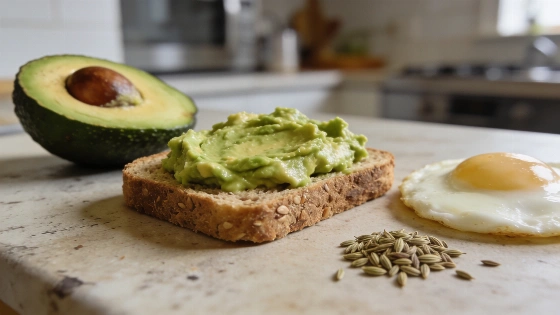
One-third of a medium avocado contains 80 calories, 7 grams of fat and 3 grams of fiber. Portion size matters. Registered dietitian and TODAY nutrition editor Natalie Rizzo says a healthy person can eat avocado daily if it fits their overall diet.
A standard serving is one-third of a medium avocado: 80 calories, 7 grams of fat, 3 grams of fiber and 1 gram of protein. It contributes fiber and unsaturated fat, but little protein per serving.
What a standard serving provides
A one-third-fruit serving has 80 calories, 3 grams of fiber, 7 grams of fat and 1 gram of protein. According to USDA FoodData Central, 100 grams of avocado provide about 160 calories, 14.7 grams of fat, 8.5 grams of carbohydrate, 6.7 grams of fiber and 2 grams of protein. Those figures use a different serving size. Check the basis when comparing foods or reading a Nutrition Facts panel.
Avocado's fat and fiber can help make a meal filling. But it is not a high-protein food. For avocado toast or a grain bowl, add eggs, beans or hemp seeds if you want a more complete meal. Don't count on the avocado to provide the protein.
Claims Check: A nutrient profile does not prove that a food or shake will produce a specific health outcome. For dietary supplements, FDA rules distinguish structure/function claims from claims to diagnose, treat, cure or prevent disease; marketing language should be checked against the product's disclosed ingredients and evidence.
Build variety into the meal
Rizzo suggests pairing avocado toast with whole-grain bread and a protein source such as an egg, beans or hemp seeds. Avocado also works in grain bowls, bean salads, tacos and sandwiches. You can mash it into guacamole, too. For other sources of fat, try nuts, seeds, nut butters, fatty fish or cooking oils.
The same idea applies to fruit choices. In this fruit comparison, different foods offer different nutritional strengths. No single food has to do everything.
Avocado can be part of a healthy daily pattern, but you do not need to eat a whole one every day to get its benefits. Keep the serving in view and round out meals with other foods. Rotate your sources of unsaturated fat. That is more useful than treating any one food as essential.