
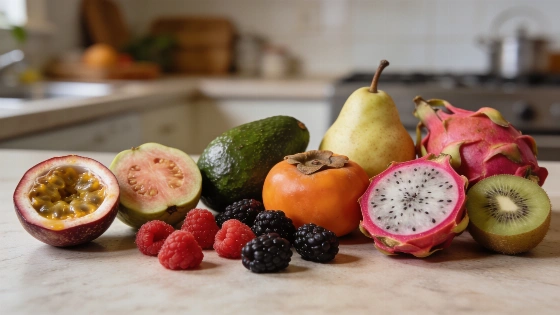
A cup of passion fruit is listed at about 25 grams of fiber. A medium apple has roughly 4-4.5 grams. Those portions are not equal: the fruit, edible part and serving size all affect the numbers.
The figures use different amounts. One medium apple weighs about 200 grams, while a cup of passion fruit is listed at 236 grams. The U.S. Food and Drug Administration's Daily Value for fiber is 28 grams for adults and children ages 4 and older. That label benchmark differs from individual adequate-intake targets, which vary by age and sex. Use the FDA Daily Value as a reference, not a personal prescription.
Fiber amounts are meaningful only alongside serving size: a cup of fruit and one whole fruit are not equivalent portions. The FDA Daily Value is 28 grams, so check both grams per serving and the portion listed on the label.
Fiber-rich berries and tropical fruit
Raspberries provide almost 10 grams per cup, or about 150 grams. A cup of guava, about 165 grams, contains around 9 grams. Its edible rind and seeds add fiber. Eat guava whole or sliced, or use ripe fruit in sauces, jams, cakes and pastries. Values can differ by variety and measurement. For a consistent comparison, use a standardized database such as USDA FoodData Central.
Blackberries have about 8 grams of fiber per cup, or around 150 grams. Eat them as a snack or use them in crisp, jam and cake. A cup of blackberries or raspberries has more fiber than a typical medium apple.
Passion fruit's tart pulp and edible seeds work in smoothies or over ricotta with honey. Dragon fruit has about 6 grams per cup, or 180 grams. Scoop out the flesh for a smoothie bowl or fruit salad. A cup of sliced kiwi, about two and a half kiwis, provides more than 5 grams.
Claims Check: A shake marketed for gut health cannot be evaluated from that phrase alone. Fiber type and amount matter, and a product's total fiber grams do not by themselves establish a specific digestive benefit; check the disclosed serving and ingredients rather than relying on broad wellness language.
Everyday fruit and what fiber does
Half an avocado contains about 6.5-7 grams of fiber. A whole one is often listed at roughly 9 grams. Avocado is not usually eaten as a sweet fruit, but it can add creaminess to dips, salads, sandwiches, toast, smoothies and pasta. A medium pear with its skin averages about 6 grams, more than an apple. Try it with salad, oatmeal or roasted prosciutto.
A persimmon weighing about 168 grams has around 6 grams of fiber. Its season is short and it can be hard to find, so it is often a cold-weather option. Add it to a salad with greens, nuts and cheese. Check whether any figure refers to a whole fruit, a measured cup or only the edible portion.
Fiber comes in soluble and insoluble forms. Soluble fiber can absorb water and slow digestion. Some forms can help lower cholesterol. Insoluble fiber adds bulk to stool and supports regularity. Fruit skins, including apple skin, contain insoluble fiber. The type of fiber and the rest of the diet matter. A single fruit or a shake's broad "gut health" claim cannot guarantee a particular result.
For nutrition shakes and powders, compare fiber grams per serving. Check for named ingredients such as inulin, psyllium or acacia. A proprietary blend may list its total weight without showing how much of each ingredient it contains. Heart-health claims also need careful wording, as this evidence review illustrates.
U.S. adult adequate-intake targets are commonly listed as 25 grams per day for women and 38 grams for men ages 19-50. After age 50, the targets fall to 21 and 30 grams, respectively. These figures differ from the FDA's 28-gram Daily Value, a general comparison benchmark on food labels. Fruit can contribute to daily intake, but it is one part of a varied diet.
Frozen fruit can be a convenient alternative to fresh. It may cost less or last longer. The fruit with the highest number is not automatically the best choice. Pick one you enjoy and can regularly find. When comparing whole fruit with a shake or functional drink mix, check the serving size, fiber amount and ingredient disclosure. Taste and practicality count.