
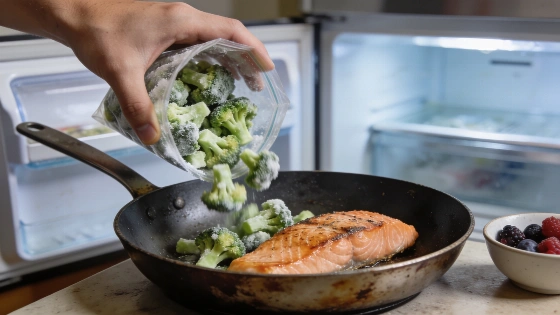
Three ounces of cooked salmon provides about 21 grams of protein. The same amount of cooked shrimp supplies about 20 grams, and salmon is also a notable source of omega-3 fats.
Frozen produce is often processed soon after harvest. European national dietary guidance recognizes frozen fruit and vegetables as practical alternatives to fresh, with nutrients generally comparable, though storage and preparation matter. Frozen foods can cut prep time and may help reduce food waste.
Labels tell you more. Check the ingredient list and Nutrition Facts panel instead of assuming a frozen product is less nutritious.
For plain frozen produce, the ingredient list should usually name the food itself. Check Nutrition Facts for fiber, protein, sodium and added sugars per serving; a short ingredient list alone does not predict a food's effect on blood glucose.
Build meals around protein and fiber
Three ounces of cooked cod provides about 17 grams of protein. Values can vary by species and preparation. USDA FoodData Central lets shoppers compare standardized food entries.
Serve seafood with vegetables or fruit, not on its own. Shrimp with avocado, mango or butternut squash adds variety and can bring fiber to the plate.
Shelled edamame is a plant-based option. One cup contains about 18 grams of protein and 8 grams of fiber. That can make it a satisfying part of a meal, but portion size and the rest of the plate still matter.
Claims Check: A package description such as 'blood-sugar friendly' does not establish that a meal prevents glucose spikes. FDA Nutrition Facts labels list Added Sugars separately, and checking the serving size helps put that number in context with the amount you actually eat.
Choose produce with fiber in mind
Broccoli, spinach and kale are easy additions to weeknight meals. A cup of cooked frozen broccoli has more than 5 grams of fiber. Cooked frozen spinach provides about 8 grams per cup, compared with less than half a gram in a cup of raw spinach. Cooked frozen kale offers almost 4 grams per cup.
Those comparisons use different cooked and raw serving volumes. Check the package serving size when comparing products.
Broccoli contains sulforaphane. Kale contains antioxidants such as quercetin and kaempferol. Research into these compounds does not make either vegetable a blood-sugar therapy. Possible effects from isolated compounds do not establish a predictable benefit from eating a serving of the food.
Corn can fit, too. A cup of cooked frozen kernels contains about 4 grams of fiber. Consider the portion, especially if you monitor carbohydrate intake. Pairing corn with a protein food and other vegetables can make the meal more substantial.
Frozen cauliflower rice makes a convenient base. A 3-ounce portion of uncooked cauliflower contains about 2 grams of fiber and 4 grams of carbohydrates. Use it in pilafs, casseroles or burrito bowls. Check packaged blends for sauces or added sodium.
Frozen berries average about 3 grams of fiber per cup, though the amount varies by berry and serving. Thaw them for oatmeal, yogurt or waffles, or blend them into a smoothie. Choose unsweetened fruit instead of fruit packed with added sugar or a sweetened sauce. Natural sugar in whole fruit is not the same label item as Added Sugars.
Frozen avocado provides about 4 grams of fiber per half cup, along with unsaturated fats. It can be a practical choice when fresh avocados might go unused. Readers interested in its broader nutrition profile can explore this avocado nutrition analysis.
Keep the freezer-aisle choice simple
Start with plain frozen foods instead of versions with added sugar, excess sodium, rich sauces or breading. Compare serving sizes and the Nutrition Facts panel. Check fiber, protein, sodium and Added Sugars.
For frozen vegetables, fruit and plant-based proteins, at least 3 grams of fiber per serving can be a useful shopping target. For protein-rich foods, 7 grams or more can help identify options that contribute meaningfully. These are practical comparison points, not medical thresholds.
Frozen food does not guarantee a specific blood sugar outcome. Its value is practical: plain vegetables, fruit, seafood and edamame can make it easier to assemble meals with fiber and protein while cutting prep time and food waste. The whole meal, portion and product formulation matter more than whether an ingredient was frozen.