
For U.S. adults, a common benchmark is about 14 grams of fiber per 1,000 calories. That works out to roughly 25 grams daily for women and 38 grams for men ages 19-50. These are general targets, not a requirement for everyone to hit the same number.
Higher fiber intake is associated with better health outcomes, including lower cardiovascular and colorectal cancer risk. But a food or shake label cannot promise those outcomes for any one person.
The U.S. Nutrition Facts label uses 28 grams as the Daily Value for dietary fiber. That figure helps compare products; it is not a personalized daily target.
Choose foods by their fiber content
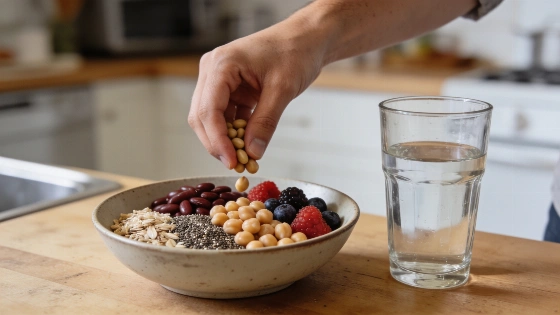
Some fruits and vegetables provide less fiber per serving than others. Lettuce and cucumbers, for example, tend to have less than beans, chickpeas, berries, chia seeds, lentils, and many whole grains. Build meals around a mix of higher-fiber choices. That can help raise your intake more than relying on produce that is relatively low in fiber.
Check the label, too. Words such as "whole grain" or "wheat" do not tell you how much fiber is in a serving. Look at the Nutrition Facts panel and the serving size. Three grams per serving is a useful practical benchmark. Five grams or more is a higher-fiber choice. Compare the amount you actually eat, not just the wording on the front of the package. The dietary fiber overview explains why fiber-rich foods offer more than a single package claim.
Build up gradually and drink enough
Too much fiber too soon can trigger gas, bloating, or changes in bowel habits. Increase your intake in steps instead of making a sharp change, and drink enough fluids as you do. Start small. A gradual approach can make the adjustment more comfortable and easier to maintain.
Fiber powders and meal-replacement shakes can be convenient. But a "prebiotic" or "fiber blend" claim does not tell you how much fiber the product contains. Compare the grams of dietary fiber per serving, the scoop or serving weight, and the ingredient list. Inulin and chicory-root fiber can cause gas for some people. Psyllium is a different fiber source, so both the ingredient and the amount matter. If a blend does not disclose individual ingredient amounts, do not assume each one is present at a meaningful dose.
Variety matters, too. Soluble and insoluble fibers have different properties. A mix of fruits, vegetables, beans, lentils, nuts, seeds, and whole grains brings different fiber types into the diet. When comparing a shake with a food-based option, check the whole Nutrition Facts panel, including calories, protein, and added sugars, as well as fiber per serving. Shake Nutrition's protein balance guide offers more on weighing how nutrients compete for attention.
Fibermaxxing may bring more attention to the nutrient, but a trend or package promise is not the measure of success. A steady increase, a wider range of food sources, enough fluids, and a close look at serving sizes and fiber grams are more dependable habits for adding fiber to everyday meals.