
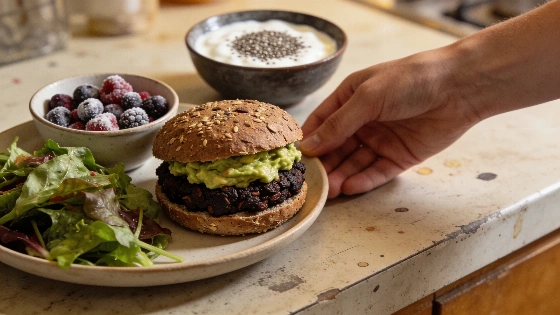
One black-bean burger has 6 grams of fiber, according to the product figure in this shopping list. Add a whole-grain bun and the meal starts with a practical fiber boost. For a dietitian who follows a Mediterranean-style pattern, beans and whole grains make an easy Costco find.
Most U.S. adults eat less fiber than recommended. Women ages 19-50 should aim for 25 grams a day, and men in that age range for 38 grams. After age 50, the targets are 21 grams for women and 30 grams for men. A common planning benchmark is about 14 grams per 1,000 calories. Costco can help keep fiber-rich foods on hand, from frozen produce to quick breakfasts. For more on warehouse-club meals, see this Costco lunch guide. For a quick reference on fiber and food choices, see NIH fiber guidance.
A 28-gram serving of chia seeds provides about 9.8-11 grams of fiber. One nutrition estimate puts that serving at roughly 138 calories and 4.7 grams of protein, so chia is a fiber-dense addition-not a high-protein serving on its own.
Small additions can make meals more fiber-rich
Chia seeds work as a topping for yogurt and smoothies. A 28-gram serving can provide about 9.8-11 grams of fiber, but check the serving size and numbers on the package you buy. Chia also adds calories and some protein. It is not a direct replacement for protein powder. Compare protein per serving, total calories and serving weight on each product's label. Kirkland Signature Sunsweet dried prunes make a simple snack on their own or with nut butter. You can also blend them into smoothies or chop them into salads.
SunGold kiwis have about 2 grams of fiber each. The dietitian washes the fruit and eats the skin, or slices the kiwi over Greek yogurt. Good Foods organic avocado mash is another easy add-on. Each single-serve container is listed here as having 4 grams of fiber. The mash can also replace mayo on a sandwich. Check the Nutrition Facts panel, since serving sizes and formulations can change.
Frozen riced cauliflower mixes easily into grain dishes. Kirkland Signature triple-berry blend, with raspberries, blueberries and blackberries, works in breakfast bowls and smoothies, or as a snack. Fiber amounts differ across these foods. Don't assume a product is a major fiber source just because it contains fruit or vegetables. Frozen produce also keeps longer than fresh, which can make it easier to use what you buy.
Easy breakfasts and quick dinners help build the habit
Catalina Crunch protein cereal is listed here as having 9 grams of fiber per serving. Kodiak Power Cakes flapjack and waffle mix is listed at 5 grams of fiber and 15 grams of protein per serving. Check the serving size on the current package before comparing those figures. Look at calories, added sugars and protein, too. That helps you decide whether a cereal or mix works as a snack, part of a meal or a protein-forward option. Chia and frozen berries can add more fiber to pancakes.
Actual Veggies black-bean veggie burgers have 6 grams of fiber per patty, according to the listed product figure. Add a whole-grain bun, vegetables, avocado mash and a side salad for a more substantial quick dinner. The bun and toppings count, too. The burger's fiber figure is not the total for the plate.
Organic mushrooms offer another option. The dietitian replaces half the meat with chopped mushrooms in dishes such as beef tacos and Bolognese sauce. Mushrooms add texture and some fiber while reducing the amount of meat. They do not provide as much fiber as beans, chia or berries.
For shakes and powders, start with the label. Check serving size in grams, fiber per serving, calories, protein and added sugars. Then look for added fibers such as inulin or chicory root in the ingredient list. These ingredients can affect some people's digestion. A "gut health" or "clean" claim does not show how much of an ingredient is in the product or prove a benefit. If a proprietary blend lists only its combined weight, it's harder to assess the amount of each ingredient. Price per serving can help with comparisons, but it doesn't replace checking what each serving provides.
Frozen cauliflower and berries, ready-to-eat avocado mash, pantry staples and easy weeknight proteins can all make fiber easier to add to meals. No single Costco item meets the whole goal. A varied mix of foods, in portions that suit your appetite and routine, is more useful than relying on one heavily marketed ingredient or supplement.