
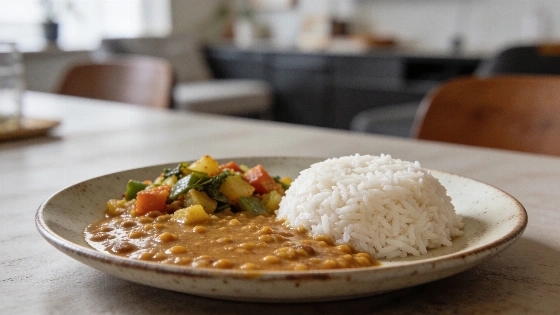
The report centers on an episode of Famously Fit with Sophie on Amazon MX Player. It attributes two comments to Malaika Arora: that salads can feel like "eating air" and that she likes to eat rice once a day. The full episode transcript or a complete primary video was not available for independent verification. Treat the wording as reported, not as a confirmed direct quotation.
The broader point does not depend on the exact quote. Rice, lentils and vegetables can make a familiar meal, and vegetables do not have to come in a salad. Coverage of Arora has also linked her public food routine to simple, home-style choices. That does not mean the same menu suits everyone. A celebrity's routine is an anecdote, not a personal nutrition plan.
This is a meal example, not a product label: no serving weight, calorie count, protein amount or ingredient quantities are provided. Without those details, a precise nutrient ratio or portion assessment cannot be calculated.
Why rice, lentils and vegetables can work together
Rice supplies carbohydrates. Lentils provide plant protein and fiber, while vegetables add fiber and a range of micronutrients. The amounts depend on the ingredients, preparation and portions. A plate description alone cannot establish exact calories or protein. The USDA FoodData Central database provides food composition data for ingredient comparisons, though a home-cooked dish still varies with its recipe.
Rice does not need to be cut out just because it contains carbohydrates. The whole meal matters: what comes with the rice, how much is served and how the dish fits a person's needs and preferences. A rice-and-dal plate is not automatically balanced in every portion or preparation. A salad is not automatically more nutritious, either.
That distinction matters. When comparing a meal with a shake, check what kind of product it is. Protein powder is designed to supply protein, but it is not necessarily a complete meal replacement. Compare serving size in grams, calories, protein, fiber and added sugars on the Nutrition Facts panel. Check the ingredient list for allergens and sweeteners, too. The FDA label guide explains serving sizes and key nutrients. Marketing terms such as "clean" do not replace those numbers. A larger scoop is not automatically a better value: divide the package price by the number of labeled servings to estimate the cost per serving.
Enjoyment and practicality belong in the conversation
Some people prefer salads. Others may find cooked vegetables, dals or lightly sautéed or steamed dishes more appealing. Variety and preparation matter. Foods a person enjoys can make an eating routine easier to stick with. That does not mean anyone needs to eat one food every day.
The same idea applies to balanced lunch ideas. A meal's value depends on its overall mix, not on whether it looks like a salad. For convenience, check whether a packaged shake is labeled as a meal replacement or simply a protein product. Compare the full panel, not just the promises on the front of the pack.
For powders, clear labels help. A stated protein source and amount per serving make it easier to compare whey, soy or plant blends. A proprietary blend may give a combined weight without listing each ingredient's dose. Check added sugars, fiber, serving size and allergen declarations. Those details tell shoppers more than vague claims such as "detox," "metabolism" or "clean energy."
The reported rice routine is not a reason for everyone to eat rice every day. Balanced eating can take different forms. No single food format defines a healthy meal. For food or a shake, check the full combination, the portion and the information the label actually provides.