
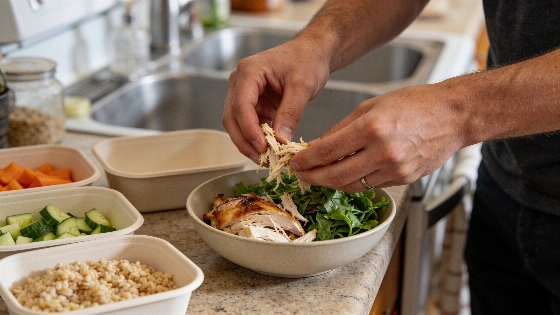
Rotisserie chicken, canned beans and pre-cooked grains can take several steps out of making dinner. Registered dietitians say these staples can help you put together a meal with protein, fiber or vegetables in less time.
Convenience alone does not tell you how nutritious a product is. Items in the same category can differ in sodium, added sugar and saturated fat. Check the serving size and Nutrition Facts panel instead of relying on terms such as "healthy" or "high protein." The FDA label guide explains how to read serving sizes and key nutrients.
Retail examples show why the label matters: one rotisserie chicken lists 170 calories, 12 g fat and 55 mg sodium per 3 oz serving, while two baked-bean products list 540 and 630 mg sodium per serving. Those bean examples also provide 4-7 g protein and 4-5 g fiber per serving.
Build the meal around ready-to-use staples
Rotisserie chicken works in salads, wraps, chicken salad or snack plates, says Kristen Carli, MS, RD. Ali McGowan, MS, RD, LDN, uses it in salads and bowls. Nutrition figures can vary by recipe and retailer. Available product listings range from 55 mg sodium per 3 oz serving to roughly 270-400 mg or more. Check the package or store listing before deciding how it fits your meal.
Gabrielle Kishner, MS, RD, CDN, advises pairing bagged salad with chicken, beans, salmon or tofu. Add rice or sweet potatoes to make the meal more substantial. Brittany Brown, RD, IBCLC, uses coleslaw mix in salads, stir-fries and tacos. Check what comes in a salad kit. Dressing, cheese, crunchy toppings and other add-ins can change the calories and sodium considerably.
Claims Check: A convenient label or wellness phrase does not tell you how much sodium, added sugar or fiber is in the portion you will eat. FDA guidance uses 2,300 mg per day as the Daily Value for sodium; compare the amount per serving and remember that larger portions contribute more.
The prep work is already done. That can make assembling a meal easier. For packaged staples, compare the serving size on the label with the amount you actually use. If a product page and package seem to differ, standardized entries in USDA FoodData Central can offer a reference point for basic foods. Branded recipes and serving sizes may not match exactly.
For readers weighing the reputation of packaged foods, this processed-food guide looks at what convenient staples contribute instead of treating processing as a single nutrition category.
Keep fast flavor and protein within reach
Jarred minced garlic and ginger save you the peeling and chopping. Dietitian Gillean Barkyoumb, MS, RDN, says she wants those flavors in her meals. Pre-cut vegetables save prep time too. Ali McGowan suggests serving them as a side, adding them to stir-fries or pairing them with hummus.
Pre-cooked lentils provide plant-based protein and fiber, McGowan says. Add them to salads or pair them with vegetables and eggs. Microwavable rice is another shortcut. Carli says the ready-to-heat bags cook in less than three minutes. Check serving sizes and sodium, especially when you combine several prepared foods.
Hard-boiled eggs offer ready-to-eat protein for breakfast or snacks. Kishner's example pairs two eggs with whole-grain toast, mashed avocado and fruit.
Make convenience work for the whole meal
Canned beans are ready for salads, bowls and wraps. Kishner recommends rinsing them to lower sodium. Baked beans can add protein and fiber, but the retail examples show a sodium tradeoff. One lists 540 mg per serving; a bacon version lists 630 mg. Check the serving size, sodium and added sugars on the specific product. Recipes differ, and rinsing does not replace comparing labels. Whole-grain flatbread or naan can also make a quick base for pizza, wraps, quesadillas or eggs, Barkyoumb says.
These shortcuts are not a meal plan on their own. They can cut the steps between shopping and eating, and make it easier to combine vegetables, grains and protein. Compare the price and nutrients for the amount you will actually serve. The front-of-package claims are not enough.
Healthy eating does not require preparing every ingredient from scratch. A useful shortcut is one that makes a balanced meal realistic on a busy day. Check products for sodium, added sugar and saturated fat, then use convenient ingredients to fill out the plate.