
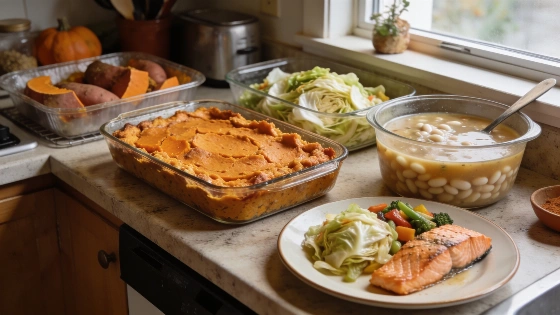
Chicken, Cabbage & White Bean Soup is planned for lunch on Days 2 through 5. The dietitian-created fall menu is designed for people with type 2 diabetes who want seasonal meal ideas and a more regular routine. Each day lists at least 111 grams of protein and 33 grams of fiber, with carbohydrates spread across meals and snacks.
The plan offers meal-prep tips for the start of the week and three calorie levels. The overview does not specify the alternative calorie targets. This menu cannot promise to control blood sugar on its own. For shoppers comparing meals with a nutrition shake, the useful question is what a serving provides, not whether the package calls it a meal replacement.
The listed daily totals are 111-146 g protein, 33-46 g fiber, and 177-227 g carbohydrate. These are plan-level figures; they do not establish an appropriate target for every reader.
Daily nutrition totals stay within a defined range
Across the seven days, calories range from 1,778 to 1,804. Protein runs from 111 to 146 grams and fiber from 33 to 46 grams per day. Carbohydrates range from 177 to 227 grams. Daily sodium totals span 1,757 to 2,282 milligrams. These describe the plan, not individual needs.
The menu pairs protein foods with beans, vegetables, fruit, and other seasonal ingredients. Diabetes-friendly eating does not generally mean cutting out carbohydrates. Food quality, portions, and what people eat alongside them matter. Beans, vegetables, fruit, and whole grains provide carbohydrates along with fiber and other nutrients.
USDA MyPlate guidance offers one way to think about that mix. Readers curious about how cooking affects a starch's place in a meal can also read our potato preparation guide.
Repeat meals make the week easier to organize
Breakfasts include Black Bean Breakfast Bowl and Spinach Tofu Scramble with Apple. The menu also features several versions of Apple-Bacon Sweet Potato Casseroles, served with fruit or kefir. The soup appears at lunch on Days 2 through 5. Cabbage-Black Bean Salad with Shrimp is on the menu for Days 6 and 7.
Dinners rotate through Maple-Mustard Salmon & Veggies, Pierogi Sheet-Pan Supper, and Pistachio Halibut & Chickpea Beet Salad. Other options are Marry Me Chicken & Spinach Penne, Brothy Lemon-Garlic Beans, Fried Rice Peppers & Garlicky Cabbage, and Sheet-Pan Chicken, Cabbage & Sweet Potato.
Fall produce gives the menu its seasonal feel. Repeated breakfasts and lunches add some routine. The overview lists meal names and nutrition totals, but not recipes, serving sizes, or specific meal-prep steps. Those details cannot be assessed here.
What the totals mean for everyday choices
The plan lists 33-46 grams of fiber a day, above the commonly cited range of 25-38 grams for adults. Individual needs vary. Many adults also fall short of recommended fiber intake, so beans, vegetables, fruit, and whole grains are practical choices to prioritize.
A shake may add protein or fiber. Check the amount per serving, serving size, added sugars, and ingredients such as inulin or chicory-root fiber. A prominent "gut health" claim does not show the dose or prove a benefit.
The plan's protein totals are also substantial. About 0.8 grams of protein per kilogram of body weight per day is a standard reference for healthy adults. Meal-planning advice often uses roughly 20-30 grams at a meal. These benchmarks are not personalized targets, and the overview does not show how much protein each meal contains.
Compare protein powders and ready-to-drink shakes by grams per serving and the ingredient list. The words "high protein" are not enough.
This plan makes protein, fiber, and carbohydrate distribution visible across a full week. It offers a structured set of ideas, not an individualized prescription or a guarantee of blood-sugar results. Anyone considering a major diet change or using a shake in place of meals can discuss their needs with a registered dietitian or clinician.