
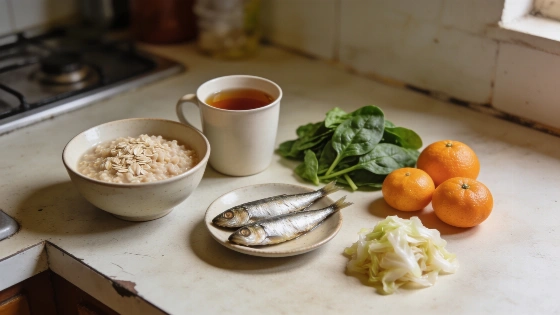
South African dietitian Omi Naidu of Newtricion Wellness favors ordinary foods over detox teas, juice cleanses and extreme weight-loss plans. Her five picks can help people build balanced meals.
The point is to make sustainable choices easier, not to promise rapid weight loss. That distinction matters with nutrition shakes and powders, too. Check a product's serving size, ingredient list and stated nutrient amounts.
A roughly 106 g serving of sardines provides about 22.6 g of protein and 351 mg of calcium, alongside vitamin B12, vitamin D and EPA plus DHA. Actual values vary by product and packing liquid, so compare the serving basis on the label.
Oats and produce bring fiber and variety
Naidu suggests cooking oatmeal with rooibos tea instead of water or milk. Rooibos contains antioxidants, including aspalathin, but evidence in humans is limited. It is not a proven weight-loss or treatment ingredient. Oats provide soluble fiber, which can help people feel full for longer. They are not a quick weight-loss fix.
Spinach is another of her picks. It contains iron, magnesium and plant nitrates. Observational research has linked daily servings of leafy greens with lower visceral fat levels, but that does not show spinach itself causes fat loss. A nutrient or plant compound listed on a powdered greens blend's label does not prove a measurable health outcome.
Citrus rounds out the produce picks. Navel oranges and naartjies provide vitamin C and flavonoids. Naidu suggests adding fruit segments to salads or eating naartjies before a main meal. Most of the pectin is in the peel and white pith. Be cautious of claims that ordinary servings reliably suppress appetite or cause weight change.
Sardines and fermented cabbage round out the list
Canned sardines provide protein, omega-3 fats and calcium, especially if you eat the soft bones. A USDA-referenced portion of about 106 g contains roughly 22.6 g of protein, 351 mg of calcium, 8.22 mcg of vitamin B12, 4.42 mcg of vitamin D, 0.435 g of EPA and 0.468 g of DHA. USDA FoodData Central provides food nutrient data. The American Heart Association recommends eating fish, particularly fatty fish, twice a week.
A Stellenbosch University study cited in the original report linked regular oily-fish consumption alongside a balanced diet with a lower body mass index among participants. It does not prove sardines alone cause weight loss. For another look at pantry staples, this canned food guide covers options such as salmon and tomatoes.
Fermented cabbage, including sauerkraut, can contain live microorganisms. Processing and pasteurization affect whether those cultures remain. It can add flavor and variety beside protein foods at dinner. But the word "probiotic" on a food or supplement label does not prove that a specific strain and dose will deliver a particular benefit.
Apply the same checks to meal-replacement shakes and protein powders. Compare protein grams with serving size and calories. Note the protein source, such as whey, pea or soy, and check added sugars, sweeteners, fiber and allergens. If a "gut health," "detox" or "clean energy" blend gives only the total weight of a proprietary blend, shoppers cannot see how much of each active ingredient it contains.
Price per serving can mislead, too, unless the serving weights and nutrient amounts are comparable. These five foods are building blocks, not a diet plan or a guarantee of weight change. Naidu's practical point is simple: repeatable habits and accessible ingredients are more credible than extreme restrictions or quick-result promises, whether they come from a diet or a tub of powder.