
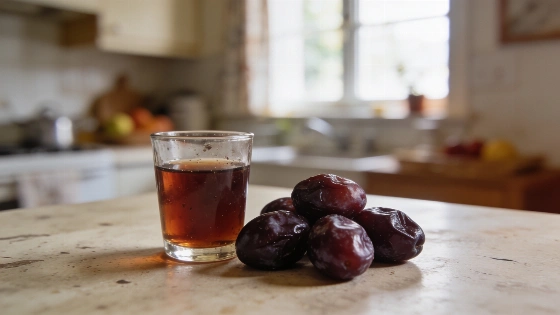
A 100-gram serving of dried prunes contains about 6.1 grams of fiber and 14.7 grams of sorbitol. Prune juice has about 6.1 grams of sorbitol, but very little fiber after filtration.
Sorbitol can draw water into the intestine. Fiber is another likely part of how prunes support regular bowel movements. Pectin and polyphenols may contribute too. Check what a serving provides, not just the product name or a "gut health" claim.
On a per-100-gram basis, dried prunes contain about 6.1 grams of fiber and 14.7 grams of sorbitol. Prune juice has about 6.1 grams of sorbitol but very little fiber after filtration.
What studies found in each form
A randomized crossover study followed 40 adults with chronic constipation. For three weeks, one group ate 100 grams of dried prunes a day. Their complete spontaneous bowel movements and stool consistency improved. The study also compared prunes with psyllium, but prunes did not outperform it for straining or overall symptom ratings. The results do not show that prunes are a better choice for everyone than a fiber supplement.
A separate study looked at 120 healthy adults with low fiber intake. Daily servings of 80 or 120 grams of prunes increased stool weight and bowel movement frequency compared with a control group. Flatulence was more common among people eating prunes. Tolerance matters too.
Prune juice has been studied as well. In a randomized trial, adults with chronic constipation drank it daily for eight weeks. Compared with placebo, they had fewer hard, lumpy stools and more stools of normal consistency. Symptoms such as incomplete evacuation also improved. The study reported no adverse effects and no meaningful increase in diarrhea or loose stools.
Claims Check: In a 40-person trial, 100 grams of prunes daily improved bowel movement frequency and stool consistency compared with baseline, but prunes did not outperform psyllium for straining or overall symptoms. The findings support a possible benefit, not a claim that prunes work better for everyone.
Fiber is the clearest difference
USDA food data show that six prunes contain about 3.4 grams of fiber. A half cup of prune juice has about 1.5 grams. The USDA food data lookup lets shoppers compare foods by serving. Check the package, though. Serving sizes on nutrition labels can differ. Juice retains sorbitol, but filtration removes much of the fruit's fiber. The two forms are not equal sources of fiber.
The same issue comes up when comparing a ready-to-drink nutrition shake with a powder. The format does not tell you what is in a serving. Check the Nutrition Facts panel for fiber, serving size, and added sugars. A drink may not provide the same nutrients as the whole food it came from.
There is no single best option. A 2021 comparison involving people with chronic constipation found that two kiwifruit a day, 100 grams of prunes, and psyllium all improved symptoms and stool frequency. The kiwifruit group reported less bloating and straining, along with fewer side effects. Prunes provide both fiber and sorbitol, but they can cause gas. The evidence does not show that prunes work better for everyone than other foods or fiber options.
Whole prunes provide more fiber and may be more filling. Juice may suit people who prefer a liquid or find it easier to include. If either option causes discomfort, consider the portion and your tolerance. More is not always better. Talk with a healthcare provider about persistent or severe constipation, or a new change in bowel habits.
As in this drink comparison, compare what each form delivers. Shared ingredients do not make two options interchangeable.