
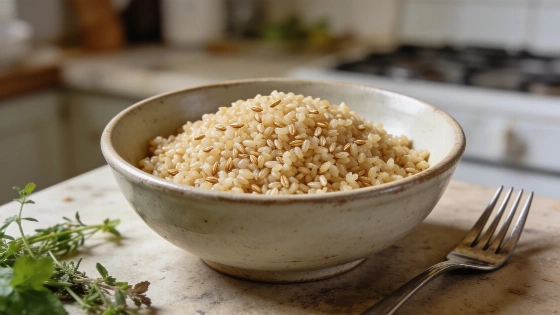
A dry serving of bulgur and a cooked cup can show different nutrition numbers. Added oil or salt can also change the finished dish's nutrition profile. Bulgur is a food, not a treatment for high cholesterol, and its effect should not be inferred from a broad marketing claim.
For shoppers, the ingredient list and serving size are useful places to start. Compare like portions, and check how the bulgur was prepared.
Serving size matters.
A U.S. Nutrition Facts label reports total dietary fiber, not the amount that is soluble versus insoluble. A total-fiber number alone therefore cannot establish the soluble-fiber dose.
What bulgur brings to the plate
Nutrition numbers depend on the portion and recipe. One independent listing for 136 g of cooked or canned bulgur with fat added during cooking reports 152.3 calories, 23.6 g of carbohydrates, 5.7 g of fiber and 3.9 g of protein. It also lists 5.6 g of fat and 335.9 mg of sodium. These figures are not a universal profile for a plain cooked cup. Compare the same serving size, and check whether the listed product includes added fat. USDA FoodData Central is another reference for comparing foods, but the package serving and preparation still matter.
Bulgur is made from wheat that is parboiled, dried and cracked. It counts as a whole grain when the bran, germ and endosperm are retained. Check the ingredient list for whole-grain wheat if that distinction matters to you. A phrase on the front of the package alone may not tell the full story.
The package's total-fiber line does not show how much of the fiber is soluble. Soluble fiber can bind bile acids and cholesterol in the digestive tract. The body then carries them out. That process is relevant to cholesterol, but available evidence does not quantify a specific LDL reduction from eating bulgur.
Fiber intake adds up across the day. A commonly used adult guideline is about 14 g per 1,000 calories, or roughly 25 g daily for women and 38 g for men. Individual needs vary. A meta-analysis of randomized trials linked diets with four to six daily servings of whole grains to improvements in several measures, including LDL cholesterol. That finding concerns an overall eating pattern, not a proven effect from bulgur alone.
The evidence has limits.
Claims Check: Fiber's potential role in cholesterol management does not make a single grain a cholesterol treatment. The listed total-fiber value also cannot show how much soluble fiber a serving provides, so it cannot by itself substantiate a specific LDL-lowering promise.
Bulgur also provides plant-based protein. Grains and other plant foods can help build meals that rely less on animal foods that may contribute saturated fat. This meal timing report discusses how missed meals can leave fewer chances to eat fiber-rich foods.
Quick ways to use bulgur
Cooking time depends on grain size. Fine bulgur cooks faster than coarse varieties. Simmer fine bulgur for about 5 to 10 minutes, or cover it with hot water and let it stand for 10 to 15 minutes. Use 1 cup of hot water for fine bulgur and 2 cups for coarse bulgur. Follow the package directions, then fluff the grains with a fork.
Bulgur's mild flavor suits pilafs with herbs and spices. Use it instead of rice or quinoa in a grain bowl. It also goes into tabbouleh with fresh herbs, olive oil, lemon juice and onion. For a sweet option, try it in pudding with fruit and nuts.
Bulgur is one way to add whole-grain fiber and variety to meals. For a fair nutrition comparison, check the serving size, ingredient list and any added salt or fat. Total fiber does not reveal the soluble portion, so it cannot support a specific cholesterol claim on its own. Bulgur fits best as one part of a varied eating pattern, not as a stand-alone fix.