
For people with excess weight, sustained weight loss can reduce liver fat. Larger reductions may also help with inflammation and fibrosis. The amount needed varies, and medical guidance matters.
An estimated 38% of adults have metabolic dysfunction-associated steatotic liver disease (MASLD). No single food causes or cures it. International recommendations favor an overall Mediterranean-style eating pattern with vegetables, whole grains, legumes, fish, nuts and unsaturated fats. They also advise limiting ultra-processed foods and avoiding sugar-sweetened drinks. The AASLD practice guidance emphasizes lifestyle changes and managing metabolic risk factors, not a "liver superfood."
For packaged snacks, compare the serving size with the amount you actually eat, then check fiber, added sugars and saturated fat. A front-label claim does not tell you the full nutrient profile.
Four snacks with useful nutrients
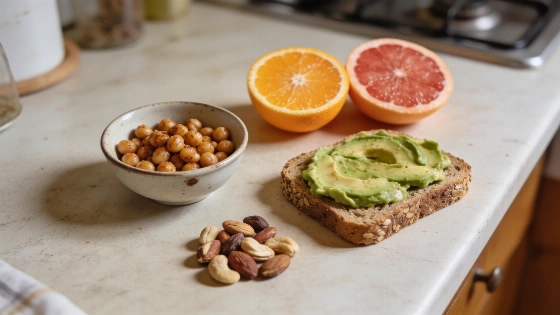
Roasted chickpeas offer a crunchy alternative to chips. They also provide fiber and protein. A 1-ounce serving has 6 grams of fiber, or 21% of the Daily Value, and 6 grams of protein. Some of the fiber is soluble, a type that can help lower blood cholesterol as part of an overall eating pattern. "Chickpeas are an excellent high-fiber snack, particularly because they contain soluble fiber," says Caroline Thomason Bunn, RD, CDCES. Check sodium, added ingredients and serving size on packaged versions.
A study of more than 190,000 adults found that those who ate the most fiber had a 28% lower risk of developing MASLD over 10 years. They also had less liver fat than people who ate the least. That is an association, not proof that chickpeas or fiber alone prevent the disease. The same distinction matters when choosing a shake or bar. A high-fiber claim describes one feature. It does not show that a product is a complete meal or that it has proven effects on liver health.
Citrus offers a different mix of compounds. Oranges contain hesperidin, while grapefruit contains naringin and naringenin. These compounds have antioxidant or anti-inflammatory properties. Early research suggests they may be relevant to MASLD, but more evidence is needed. Grapefruit can change how some medicines work, including certain statins and blood-pressure medicines. If you take medication, ask a doctor or pharmacist before adding grapefruit regularly.
Claims Check: Grapefruit and grapefruit juice can alter the concentration of certain medicines, including some statins and blood-pressure drugs. The interaction depends on the specific medicine, so check with a clinician or pharmacist rather than assuming grapefruit is safe with every prescription.
Almonds, walnuts and cashews provide protein, fiber, monounsaturated fats, vitamin E and other nutrients. Lisa Andrews, M.Ed., RD, LD, says these nutrients "may help reduce inflammation." Research has linked nut intake with lower odds of fatty liver disease, but the evidence is not conclusive. Nuts are calorie-dense. A small handful makes a practical portion to pair with fruit or add to trail mix. Check packaged nut mixes for sweeteners and extra salt.
Avocado on whole-grain toast combines fiber with unsaturated fat. Half an avocado, about 100 grams, contains just under 7 grams of fiber and 10 grams of monounsaturated fat. Whole-grain bread adds fiber and nutrients such as B vitamins. There is little direct research on avocado toast. Still, Mediterranean-style eating patterns that include unsaturated fats and whole grains are considered suitable for MASLD. Check the ingredient list and Nutrition Facts panel, even when the bread package makes a health claim.
Think beyond one snack
These snacks can help you feel full and add fiber, unsaturated fats or other nutrients. The evidence supports them as part of an overall eating pattern, not as treatments for liver disease. Guidance also recommends physical activity. It calls for gradual weight loss when appropriate and management of blood sugar, cholesterol and blood pressure. The NIDDK overview explains why care should be tailored with a health professional.
Read the Nutrition Facts panel on packaged foods. Do not rely on phrases such as "detox," "cleanse" or "liver support." Compare serving size, calories, fiber, added sugars and saturated fat. For shakes, check protein amounts and ingredients. See whether the product is labeled as a meal replacement or a protein supplement. A protein powder or functional blend is not automatically a complete meal. Proprietary blends can also make it harder to tell how much of each ingredient the product contains.
The same focus on ingredients and context applies to morning drink choices. One food or drink cannot carry the weight of a health claim. Nuts, chickpeas, avocado toast and citrus can be useful everyday options. None is a cure or a substitute for medical care.