
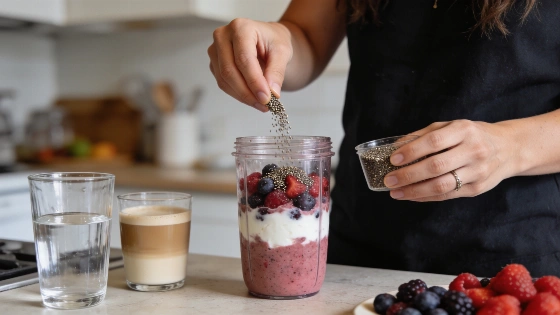
A protein shake may do more than bridge the gap before lunch. A breakfast with protein may affect glucose responses later in the day. No drink guarantees that result. The effect depends on the whole meal, the person and what the shake contains.
Water, yerba mate, a latte made with care and a balanced protein shake can each have a place. For packaged drinks and powders, read the Nutrition Facts or Supplement Facts panel. Terms such as "clean," "gut health" and "blood sugar support" tell you less than serving size, total carbohydrates, added sugars, protein and fiber.
For a shake, compare protein and fiber with total carbohydrates and added sugars per serving. Check the scoop weight too: a large serving can make a product look more protein-dense than it is when compared by scoop alone.
Start with the simplest options
Water is the simple default. It has no carbohydrates or added sugar, and hydration matters, especially when blood glucose is high. Its main value is replacing sweetened coffee drinks, juice or soda. It does not undo the effects of a carbohydrate-heavy breakfast.
If plain water does not appeal, add lemon or lime for flavor. Small early studies have looked at whether citrus acidity affects starch digestion. That is not a reason to treat lemon water as a glucose-lowering intervention. A separate lemon-water trial found better hydration and a small mood boost. It did not support detox or weight-loss claims.
For caffeine without added sugar, try unsweetened yerba mate. It contains caffeine and plant compounds. Current evidence does not support treating it as diabetes therapy or promising a specific glucose benefit. Caffeine affects people differently. Consider your own response, and avoid it late in the day if it disrupts your sleep.
Make coffee and shakes work harder
A latte can fit into the routine. The milk and extras matter. Cow's milk and unsweetened soy milk provide protein, while syrups, sweetened creamers and whipped toppings can add sugar. Plain milk in unsweetened coffee or tea is a simpler starting point. Check the carton or cafe nutrition information because recipes and serving sizes vary.
Caffeine may temporarily affect blood glucose in some people. The response is individual. Often, the clearest difference on the label is between unsweetened coffee or tea and a sweetened drink with syrups or flavored creamers. If you monitor glucose, your readings can help show how you respond. Responses vary.
A shake is closer to a meal when it combines protein with fiber and fat. Greek yogurt, cottage cheese or soy milk can add protein. Berries add fiber, while chia seeds, ground flaxseed or avocado can add fiber or unsaturated fat. The whole mix matters. Protein, fat and fiber can affect digestion and the post-meal glucose response, but they do not cancel out the carbohydrates in a drink.
When comparing protein powders, check the protein grams per serving and the serving weight. Whey, casein and soy are complete protein sources. Plant blends may combine sources such as pea and rice to provide a broader amino-acid profile. Check total carbohydrates, added sugars, fiber, allergens and sweeteners too. Sugar alcohols and some fibers, including inulin or chicory root, can cause digestive discomfort for some people. A proprietary blend's total weight does not tell you how much of each ingredient it contains. Labels can hide that.
For a powdered meal replacement, look beyond protein. Calories, fiber, fat, added sugars, vitamins and minerals can show whether it is meant to be a more substantial meal or mainly a protein supplement. Price per serving helps only when the serving size is clear. Compare cost with grams of protein and the rest of the nutrition panel. A "detox," "clean energy" or "gut health" claim does not prove that a product delivers those outcomes.
Look beyond the first sip
Morning glucose readings can reflect more than breakfast. Evening meals, late-night snacks, sleep and activity may all matter. Your overall eating pattern tells you more than one drink choice. Clinical diagnostic thresholds include fasting glucose of 126 mg/dL or higher, HbA1c of 6.5% or higher, or random glucose of 200 mg/dL or higher. These thresholds help assess diabetes. They do not prove that a particular drink works. Mayo Clinic's diagnostic criteria list these measures.
Movement after eating may also help with post-meal glucose for some people. A short walk is one option if it suits your health and routine. It cannot replace prescribed diabetes care. Context matters.
No drink is best for everyone. Water is a reliable default. Unsweetened mate or coffee can suit a caffeine routine. A latte depends on its milk and extras, while a protein-forward shake can offer more of a meal. Read the panel and check the serving size. Judge claims by the disclosed ingredients, not the product name. No universal winner.