
Oncology dietitian Krystle Zuniga says roughly 30% to 50% of cancer cases are preventable through lifestyle factors that people can change, including diet. That population-level estimate does not promise that changing one food will prevent an individual diagnosis.
Oncologist Yuliya Linhares describes edamame as one fit for a plant-forward eating pattern, not a protective food on its own. No single snack can prevent cancer.
A cup of cooked edamame is commonly listed at roughly 18 g of protein and 8 g of fiber, though serving size and preparation affect the numbers. This is a whole-food nutrition benchmark, not a Supplement Facts claim.
What edamame adds to a snack
A cup of cooked edamame has about 18 g of protein and roughly 8 g of fiber. USDA FoodData Central offers a reference for comparing foods, though the actual values depend on preparation and serving size. One French explainer gives a different fiber figure: 6.1 g per 100 g. Check the stated portion before comparing numbers.
Whole edamame is different from a protein powder or meal-replacement shake. For a packaged product, check the serving weight, protein grams, calories, added sugars and allergen statement. A large scoop or a "high protein" headline does not tell you how much protein you get per calorie or per dollar. If a blend lists ingredients without individual amounts, its total blend weight does not show the dose of each ingredient.
Edamame contains soy isoflavones, including genistein and daidzein. These compounds can interact with oestrogen-related pathways. The World Cancer Research Fund summarized an association between soy intake in childhood and adolescence and lower adult mammographic density, a marker linked with breast cancer risk. That finding concerns an early-life developmental window. It does not show that eating edamame as an adult prevents cancer. The NCI's soy guidance offers more context on soy and cancer research.
Claims Check: Edamame is a whole food, not an extracted isoflavone supplement, and findings about one form should not automatically be applied to another. Cancer-prevention language should not be read as proof that a food or supplement prevents or treats disease; assess the evidence and the exact product claim separately.
Fiber and protein matter in the broader pattern
Edamame adds fiber, but one serving is only part of a day's intake. A 2019 research summary reported that each 8 g increase in daily fiber was associated with a 5% to 27% lower incidence or mortality across several non-communicable diseases, including colorectal cancer in pooled evidence. The range covers different outcomes. It is not a prediction of how eating edamame would change one person's risk.
Replacing processed or red meat with soy or other plant proteins can also change the overall dietary pattern. Linhares points to research that associated each 50 g increase in daily processed meat intake with a 17% higher colorectal cancer risk. That comparison does not mean edamame offsets the risk. It supports making room for plant foods more often.
A separate snack roundup also looked at practical food choices, though it covered a different health topic.
Make it an easy choice, not a cure-all
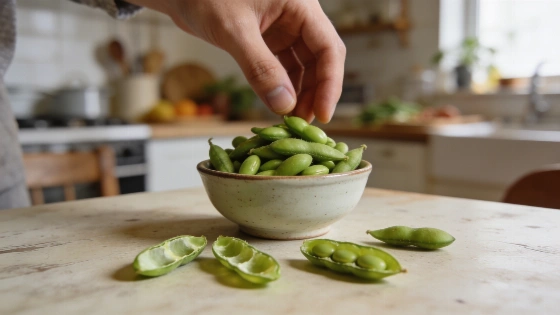
Serve edamame in the pods, blend it into a dip or pack it roasted for a portable snack. It offers protein, fiber and plant compounds in a convenient food that can replace a less nourishing option. Regular activity, recommended screenings, sun protection and avoiding smoking are also part of a broader approach to reducing cancer risk.
Advice about soy can vary by country and risk group. A French public-health explainer, for example, reports that ANSES advises caution for people with a history of breast cancer. Anyone with a personal cancer history or questions about soy intake should talk with their care team.
For other shoppers, edamame can be a useful everyday food. It is not medicine or a substitute for evidence-based care.