
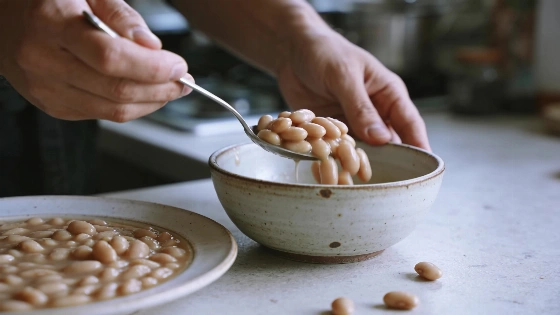
In the digestive tract, soluble fiber can bind bile acids and help carry them out of the body. That is one reason fiber-rich eating patterns are linked with lower LDL cholesterol. It does not make beans a treatment or guarantee a particular result.
Registered dietitian Natalie Rizzo, TODAY nutrition editor, points to beans as a strong plant-protein choice because they provide protein and fiber together. If you are comparing meal replacements or protein powders, check the amounts on the Nutrition Facts or Supplement Facts panel. A "heart healthy" or "gut health" claim does not tell you whether the product contains a meaningful dose. Read the panel.
Cooked lentils provide about 15.6 g of fiber per cup-roughly 7.8 g per half-cup. Serving size matters when comparing fiber figures across foods and product labels.
Beans bring protein and fiber
The original nutrition reporting describes navy beans as especially rich in fiber, with more than 9 grams in a serving. Black beans and red adzuki beans also provide substantial fiber. Exact amounts depend on serving size and preparation, so compare equal portions. Beans are affordable and easy to keep on hand. Add them to tacos or quesadillas, or blend white beans into soups, dips and sauces.
Beans bring both nutrients to the same meal. They are most useful when they replace some foods higher in saturated fat or calories, rather than simply adding to an unchanged diet.
Legumes, some fruits and vegetables, and whole grains contain soluble fiber. Dietary guidance commonly sets a target of 14 grams of fiber per 1,000 calories. For adults, that often works out to roughly 22 to 34 grams a day, depending on age and sex. A shake label may list total fiber without saying how much is soluble. Check the ingredient list for sources such as psyllium, inulin or chicory root. Their presence alone does not prove a particular effect. For more on protein needs, see this protein intake guide.
Claims Check: A meta-analysis of 26 randomized trials involving 1,037 people found that about one daily serving of pulses (a median of roughly 130 g cooked) lowered LDL by around 7 mg/dL, or about 5% of baseline. That is a modest average change-not a guaranteed result and not an effect comparable to medication.
Lentils and nuts offer other benefits
Lentils are another useful legume. USDA FoodData Central lists about 15.6 grams of fiber in a cup of cooked lentils, or about 7.8 grams in a half-cup. The USDA food database can help you compare similar foods. Lentils also provide protein and are naturally low in saturated fat. They cook relatively quickly. Use them to replace some or all of the meat in a recipe, or add them to soups, curries, salads and pasta sauces.
Nuts offer a different option for people watching cholesterol: unsaturated fats. Replacing foods high in saturated fat with foods rich in unsaturated fats can help lower LDL. Add almonds or walnuts to oatmeal, yogurt or salads. They also work as a snack, or as nut butter in place of butter on toast. Nuts are calorie-dense, so portion size may matter if you track calories.
For packaged shakes and powders, separate a disclosed amount from a broad marketing claim. Check serving size, total fiber, protein, calories, added sugars and saturated fat. If a proprietary blend gives only a combined weight, you cannot tell how much of each ingredient it contains. FDA rules distinguish structure/function claims for dietary supplements from claims to diagnose, treat, cure or prevent disease. A phrase such as "detox," "cholesterol support" or "metabolism" is not proof that a product delivers a clinical benefit. The FDA claims guidance explains the distinction.
Beans are a strong starting point because they combine plant protein and fiber. Lentils and nuts offer more options. The evidence supports eating them as part of an overall pattern, not treating any one food, shake or ingredient as a cholesterol fix.