
A half-cup of Kellogg's All-Bran Buds lists 17 grams of fiber. But that number alone can't tell you whether breakfast will keep you full until lunch. Protein, calories, portion size and the rest of the meal matter too. The whole serving counts. As with nutrition shakes and powders, look at what the full formulation provides, not just what the front of the package promotes.
Fiber and protein can help make a meal satisfying, but neither guarantees a particular level of fullness. These cereals are starting points. Milk, yogurt, fruit, nuts or seeds change the bowl's protein, energy and nutrient content. Check the current package for serving size and added sugars. Labels and formulations can vary by market and change over time.
The listed 17 grams of fiber in a half-cup serving of All-Bran Buds is more than 60% of the U.S. 28-gram Daily Value for fiber. Confirm the serving size and current Nutrition Facts panel on the package you buy.
Five cereals with protein or fiber to build on
Kellogg's All-Bran Buds Cereal lists 17 grams of fiber and 4 grams of protein per half-cup serving. It's made with wheat bran and psyllium husk. Try it with dairy or soy milk, or add it to Greek-style yogurt. Psyllium is a soluble fiber that absorbs water. Its effect on fullness depends on how much you eat and what else is in the meal. Not used to a high-fiber serving? Increase fiber gradually and drink enough fluids to help limit digestive discomfort.
Kinga Portik-Gumbs, RDN, recommends Nature's Path Heritage Flakes Cereal, a six-grain blend. A one-cup serving lists 160 calories, 7 grams of fiber, 5 grams of protein and 23 grams of whole grains. Whole grains can provide fiber and other nutrients. The product name alone won't tell you how much added sugar is in a serving. Check the label, then compare its serving size with what you actually pour.
Alissa Palladino, M.S., RDN, LD, CPT, points to the whole grains, fiber and protein in Kashi Go Protein & Fiber Cereal Original. A 1¼-cup serving lists 200 calories, 12 grams of fiber and 12 grams of protein. That works out to 6 grams of protein per 100 calories. It's a comparison metric, not a promise of fullness or a measure of overall nutritional quality. Palladino suggests topping Greek-style yogurt or cottage cheese with the cereal for a higher-protein bowl.
Claims Check: A high fiber number alone does not establish that a cereal will keep every person full until lunch. USDA guidance emphasizes a broader eating pattern that includes protein foods, dairy, fruits, vegetables and whole grains, while limiting added sugars and refined carbohydrates; judge the whole meal as well as the cereal label.
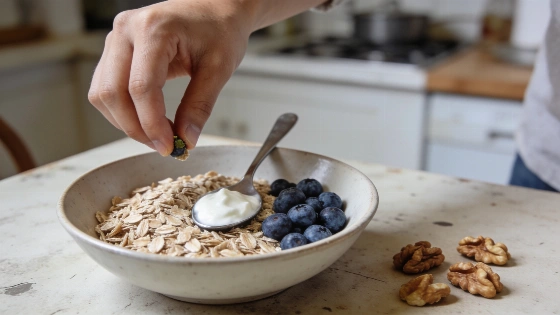
Amanda Crowe, M.S., RD, INHC, notes that oats contain beta-glucan, a soluble fiber that can form a viscous gel during digestion. One cup of dry oats lists 307 calories, 10.5 grams of protein and 8 grams of fiber. That's more than many people eat in one sitting, so compare the label's serving size with the amount you prepare. Berries, cinnamon, walnuts, chia seeds or ground flaxseed add flavor and change the meal's overall nutrient and energy content.
Original Cheerios lists 140 calories, 4 grams of fiber and 5 grams of protein per 1½-cup serving. Crowe likes adding walnuts, blueberries and cinnamon. Those toppings add ingredients and nutrients, but they also change the total calories and portion size. Count them when you assess the whole breakfast.
Make the bowl work as a meal
Cereal is only one part of breakfast. Olayide Adejumobi, RDN, LD, says the mix of foods can affect how filling a meal feels. Crowe suggests adding nuts, fruit or Greek yogurt, or serving an egg on the side. USDA dietary guidance also focuses on eating patterns with protein foods, dairy, fruits, vegetables and whole grains, rather than relying on one nutrient number.
Dairy or soy milk can add about 7-8 grams of protein per glass, Palladino says. The amount depends on the product and serving size. For more ideas on choosing a protein-rich accompaniment, see this protein snack comparison. As with a powdered shake, check the serving size and full label. Protein, calories, added sugars and ingredients all affect what you're choosing.
Portion size matters too. Adejumobi cautions that a very small serving may not provide enough energy to last through the morning, even if the cereal is nutritious. A larger serving may feel more substantial. Toppings can help round out a smaller portion. For a simple comparison, note the protein, fiber and calories per labeled serving. Then compare those figures with what's in your bowl.
No cereal here guarantees fullness until lunch. Dietary guidance does not single out these five options. Choose one you enjoy, check the current Nutrition Facts panel for serving size, protein, fiber and added sugars, and build the meal around your appetite and schedule. The bowl matters more than a front-of-box promise or one standout number.