
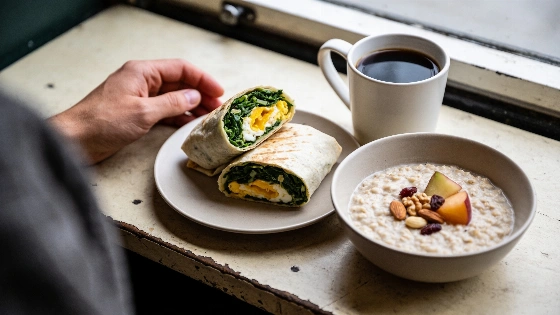
Black coffee, cold brew, Americanos and unsweetened tea keep added sugar low. Flavored syrups, whipped cream and drizzles can change that quickly. Check the full Nutrition Facts information instead of relying on a menu name or health-focused claim.
For food, start with options that pair protein with fiber or produce. The spinach, feta and egg white wrap, classic oatmeal and protein boxes are examples. Nutrition details and availability can change by location and season, so check the current app or menu before you order. Names can mislead.
In October 2026, Starbucks listed 16 g of sugar in a 16-ounce Sugar-Free Caramel Protein Matcha and 21 g in the 20-ounce version. A 16-ounce cold Sugar-Free Caramel Protein Latte was listed with 9 g of sugar and 29 g of protein.
Eight orders worth considering
At breakfast, the spinach, feta and egg white wrap brings together eggs, vegetables and a whole-wheat wrap. Classic oatmeal provides whole-grain oats. Use less of the brown sugar packet, or add nuts or fruit if you prefer. These are practical choices, not a guarantee that one item suits everyone best.
Veggie egg bites are a compact option with protein. The eggs and cheddar protein box pairs protein with fruit and nuts. The chicken and quinoa bowl can work as a fuller lunch. Go easy on the sauce if you want to tailor the bowl to your preferences. Portions matter.
For a snack, consider the cheese and fruit box. Cold brew or an Americano gives you a low-calorie coffee base. Hot or iced tea can be ordered unsweetened. A splash of milk adds creaminess without flavored syrup.
Make the order fit your day
Protein alone may not keep a meal satisfying for long. Pair egg bites with oatmeal or fruit for fiber. Fruit can also add variety to another protein-forward choice. If you want a sweet drink, ask for fewer syrup pumps, choose a smaller size, or skip the whipped cream and drizzles.
The protein drinks show why "no added sugar" and total sugars are different label details. Starbucks said the sugars come mainly from protein-enriched milk, while the reported menu figures still show total sugar. The eight drinks named in the lawsuit were listed at 270-340 calories in venti sizes. Protein content alone does not describe a drink's full nutrition profile.
Check the Starbucks app for current nutrition details, especially when ingredients or availability may change. The same habit helps with restaurant meals. This sandwich nutrition review shows why reported figures should be checked against current official item information. Starbucks said its U.S. 2026 holiday menu was expected to arrive on November 5. Seasonal offerings may not be available year-round.
U.S. dietary guidance recommends keeping added sugars below 10% of daily calories. The FDA's added sugars label guidance explains how added sugars appear on packaged-food labels. These are broad benchmarks, not a verdict on any single order. Sodium can also add up across a meal, especially with processed meats and cheese. Current item details can help you choose what fits your needs.
Check ready-mix chai and matcha, too. Powders and syrups may add sugar. The FDA says up to about 400 mg of caffeine a day is generally not associated with negative effects for most healthy adults. Its caffeine guidance notes that sensitivity and how quickly people process caffeine vary. For a latte, unsweetened milk and no flavored syrup are simple ways to limit added sugar.
Choose with the menu in front of you
There is no single healthiest Starbucks food for everyone. The wrap and oatmeal offer different ingredient combinations. Egg bites, protein boxes and the quinoa bowl suit different appetites and meal needs. Treats can fit, too. The difference is whether a sweet drink or pastry is an occasional choice or a routine default.
A more balanced Starbucks meal depends on the order, not the health halo of one item. Start with protein and fiber where possible. Check total and added sugars separately, then use current menu information to choose what fits your day.