
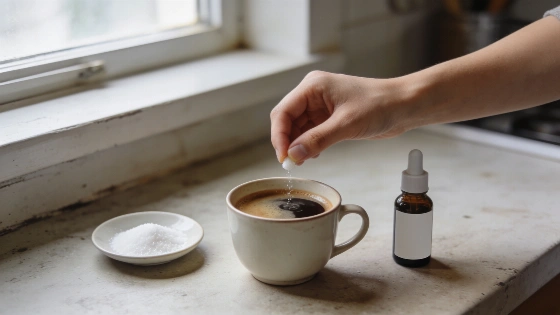
Steviol glycosides can be 200-400 times sweeter than sugar, so a little may go a long way in coffee. But a packet labeled "stevia" may contain other ingredients that affect taste and what you add to your cup.
Laura Isaacson, RD, CDCES; Kylie King, RD; and Dawn Menning, RD, CDCES, all recommend stevia. Menning says its potency means you may need only a small amount. Start small.
Steviol glycosides are about 200-400 times sweeter than sugar. Check the serving size and ingredient list: a stevia product may also contain a carrier or another sweetener.
High-purity steviol glycosides, at least 95%, are considered GRAS under FDA criteria. That status applies to specified ingredients and conditions of use. It does not automatically cover every product marketed as stevia. The FDA's sweetener overview distinguishes steviol glycosides from whole-leaf and crude stevia extracts. Those extracts are not FDA-authorized as sweeteners in the same way.
Why the form and label matter
Stevia comes as powders, liquid drops, and flavored syrups. Drops may mix more easily into cold drinks. Some powders can settle in iced coffee. Follow the serving directions and add a little at a time. Too much concentrated sweetener can make coffee unpleasantly sweet.
The dietitians favor highly purified steviol glycosides, including rebaudioside A, or Reb A, for a less bitter taste. Check the ingredients, not just the front of the package. Some products contain maltodextrin, dextrose, or erythritol alongside stevia. Those ingredients change the formula. Erythritol and other sugar alcohols can cause digestive symptoms for some people. Inulin, a soluble fiber sometimes added to products, may also affect digestive comfort, depending on the person and the amount.
Claims Check: EFSA's acceptable daily intake for steviol glycosides is 4 mg per kg of body weight per day, expressed as steviol equivalents. That is a safety benchmark, not a recommended target, and it cannot be compared directly with the total weight of a stevia product on a label.
For a 70 kg adult, that acceptable daily intake, or ADI, equals 280 mg of steviol equivalents per day. It is not a limit of 280 mg for any packet or powder. Products have different ingredients, and the amount expressed as steviol equivalents may not match the total serving weight on the label.
EFSA set the ADI in 2010. Its available assessment of newer forms, including enzymatically produced rebaudioside M, does not change that benchmark.
Safety limits and weight-management claims are separate issues. WHO's 2023 guidance does not recommend non-sugar sweeteners as a long-term weight-control strategy for people without diabetes. It does not ban stevia. WHO also said evidence on long-term effects is limited. Observational links can be affected by reverse causation and other factors.
Choosing a product that suits your coffee
SweetLeaf was the brand these dietitians mentioned most often. Menning says its products lack added fillers or artificial sweeteners. She also notes that the powder contains inulin. King also prefers NuNaturals and Better Stevia by NOW Foods. Formulas can differ, so check the ingredients on the specific package. A brand name or front-label claim is not enough.
Compare the serving size and full ingredient list. If a powder contains a carrier or fiber, consider how that fits your preferences and digestion. For a blend, check whether the label names each sweetener. The format matters too. Drops may work well in iced coffee, while powder may be easier in a hot cup.
Readers considering other natural sweeteners can also read this honey and agave breakdown. Monk fruit is another option if stevia's aftertaste does not suit you. Check its ingredients as well. Some products combine monk fruit with other sweeteners or carriers.
Stevia can sweeten coffee without adding sugar, but it is not a universal choice or a proven shortcut for weight management. Pick a format you enjoy, read the ingredients and serving directions, and use an amount that works for your cup.