
Professor Felice Jacka says the focus on protein can distract from a more common shortfall. Australian Bureau of Statistics data show that 98.5 per cent of Australians meet their protein needs, while 83 per cent do not reach recommended fibre targets.
Women are recommended to get around 25 grams of fibre a day. Jacka puts it plainly: "We need to eat a lot more fibre."
Label check: Compare the grams of fibre per serving-not just a 'high fibre' claim or the weight of a fibre blend. The ingredient list can help identify which fibre sources are included.
Why a range of plant foods matters
Fibre does more than support regularity. Gut bacteria ferment some types, producing short-chain fatty acids such as acetate, propionate and butyrate. These metabolites take part in processes linked to gut function, metabolism and immune signalling.
Different fibres have different properties, so the total number of grams tells only part of the story. Oats, barley and legumes supply fermentable fibres. A varied, plant-rich diet gives gut microbes a wider range of substrates. Research that compared microbiomes across five industrialised countries also found that some diet-microbe associations varied by country. There is no single template for a "healthy" microbiome.
That matters when a shake, powder or functional drink is sold for "gut health." Check the Nutrition Facts or Supplement Facts panel for fibre grams per serving, then read the ingredient list. Inulin or chicory-root fibre, psyllium and acacia are different ingredients, not interchangeable labels for one effect. A blend's total weight does not show how much of each ingredient it contains.
Claims Check: 'Gut health' is not a fibre dose or a clinical outcome. On U.S. Nutrition Facts labels, the declared fibre amount is given per serving, but that number alone does not tell shoppers the fibre's properties or establish a specific health benefit.
Simple grocery swaps can add fibre
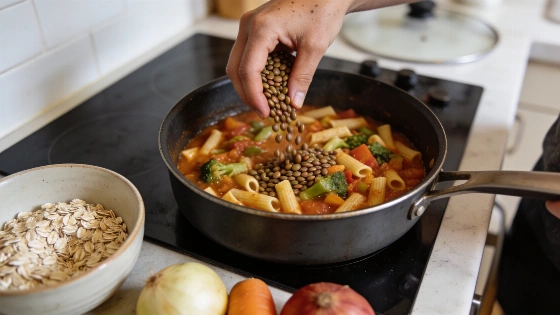
Jacka often returns to whole grains such as oats, barley, rye, quinoa and brown rice in her research. She describes legumes, including lentils, chickpeas, beans and peas, as affordable and filling sources of both fibre and protein. Colourful vegetables also provide polyphenols.
A few simple swaps can bring more of these foods into meals. Add a tin of lentils to spaghetti bolognese, choose wholemeal pasta, or buy porridge and five-grain bread. Jacka's approach is to add nourishing foods so they replace some less nutritious choices, rather than treating healthy eating as a list of restrictions.
Added fibre can be useful, but a scoop of it cannot replace the range of nutrients and plant compounds in whole foods. When comparing shakes, check the serving size as well as the fibre grams; a larger scoop can make the per-serving figure look more substantial. A product may list the total weight of a proprietary blend without showing how much of each component it contains. The NIH supplement label guide explains what to look for on products sold as dietary supplements.
Fibre type can also affect comfort. Fermentable fibres can cause gas, especially when intake rises quickly, so increasing them gradually may be easier to tolerate. Psyllium is a viscous soluble fibre also used for stool regularity, but it differs from highly fermentable fibres. For products that promise a particular digestive effect, look for evidence that matches the ingredient, dose and outcome. A general "prebiotic" or "clean" claim is not enough.
Jacka also suggests fermented foods such as plain yoghurt, kefir, sauerkraut, kimchi, tempeh and kombucha. Research is still developing, so claims that a particular food or powder will reliably "reset" or transform someone's microbiome go beyond what the evidence can establish. Microbiomes vary, and marketing language is not a personal health assessment.
Protein is essential, but these figures do not support making it the main dietary concern for most Australians. Meals built around whole grains, legumes and colourful vegetables offer a more useful everyday focus. When comparing shakes or fibre products, check the amount per serving, named fibre sources, serving size and price per serving. Broad claims such as "gut health," "detox" or "cleanse" are a reason to inspect the formulation, not proof of a benefit.