
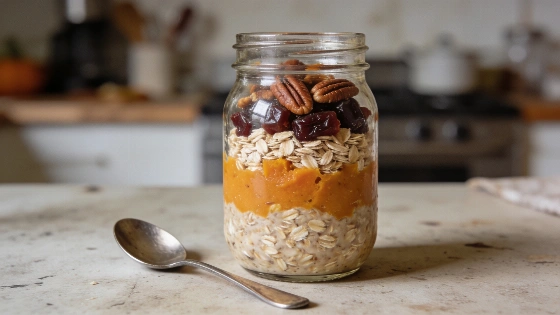
Oats, dates, pumpkin, flaxseed, pecans, almond milk and Greek yogurt make up this make-ahead breakfast. The recipe lists 8 grams of fiber, 332 milligrams of calcium and 240 milligrams of sodium per serving, with no added sugar. Those figures have not been independently verified, so they should be treated as the recipe's stated values, not lab-tested results.
For anyone comparing breakfasts or adapting a recipe with a nutrition shake or protein powder, the serving size matters as much as the headline numbers. Check whether the nutrition panel describes the amount actually eaten, then read the full ingredient list. "No added sugar" does not mean "sugar-free": dates contain naturally occurring sugars.
The recipe lists 8 g of fiber, 332 mg of calcium and 240 mg of sodium per serving, with no added sugar. These are stated recipe values, not independently verified lab results.
What the recipe offers
Dates add sweetness without a separate sweetener. Oats, flaxseed and pecans contribute fiber. For a packaged shake or powder, compare total and added sugars, fiber, serving size and ingredient sources. Words such as "natural" or "clean" do not establish a nutritional advantage. The FDA's supplement guidance also explains why a product's category and label matter when weighing marketing claims.
The stated 240 milligrams of sodium per serving can help with comparisons, but it is not a universal kidney-health benchmark. The listed calcium figure also depends on the ingredients and serving used, including whether the almond milk is fortified with calcium. For powdered products, check the Nutrition Facts or Supplement Facts panel for sodium, calcium and serving weight instead of relying on front-label claims.
The phrase "no added sugar" has a specific meaning: it does not remove sugars naturally present in dates or dairy. The National Kidney Foundation says sweet foods and drinks high in fructose can raise uric acid. That general finding does not show that this recipe causes kidney problems or is unsuitable for everyone.
Claims Check: Kidney nutrition is individualized. The National Kidney Foundation notes that some people with chronic kidney disease-particularly people on dialysis or with heart failure-may need to limit fluids, so general advice to drink more water is not appropriate for everyone.
Personal kidney needs come first
Chronic kidney disease does not mean everyone needs to restrict potassium, sodium, phosphorus or fluids. Needs depend on kidney function, disease stage, dialysis, medicines and other health conditions. A recipe's per-serving numbers cannot tell someone whether it fits their care plan, so recurring food choices are best discussed with a clinician or renal dietitian. The same goes for shakes and powders: check the listed minerals and serving size rather than relying on a "kidney-friendly" or "renal support" claim. See this kidney meal-planning guide for additional context.
People prone to kidney stones also need fluid advice that fits their own situation. Some may be told to increase fluids, while others have a fluid limit. Follow the care team's guidance rather than treating general hydration advice as a prescription.
Pumpkin-Date Overnight Oats may be a convenient breakfast, but the available information does not show a treatment effect or prove that the recipe is best for kidney health. Its listed fiber, calcium and sodium describe the recipe; the ingredients and a person's dietary needs determine whether it is a practical fit. As with a nutrition shake, check what each serving contains, how much is actually eaten and whether the claims match the disclosed facts.