
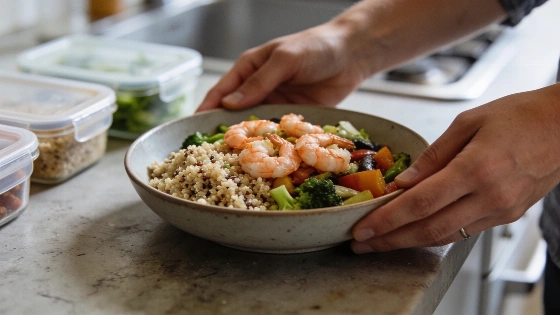
More than 35 million U.S. adults are estimated to have chronic kidney disease (CKD), and many may not know it. Diabetes and high blood pressure are among its most common causes. That number is large. Regular checkups matter, but no single meal plan can prevent or treat kidney disease. NIDDK's CKD overview explains more.
The menu is built around 1,800 calories a day, with options for 1,500 and 2,000 calories. It lists daily minimums of 73 grams of protein and 38 grams of fiber. Those numbers need to be checked against personal needs. They are not universal targets for people with kidney disease.
The plan lists at least 73 g of protein and 38 g of fiber per day. Those are menu totals, not individualized kidney-health targets.
What the week includes
Breakfast starts with Brain-Healthy Smoothie on Day 1. Raspberry-Peanut Butter Chia Pudding is on the menu from Days 2 through 5, followed by Chia Seed Overnight Oats on Days 6 and 7. Lunch follows a similar pattern: Basil White-Bean Salad with Chicken on Day 1, Chickpea & Red Pepper Lettuce Wraps on Days 2 through 5, and Savory French Lentil Salad on the weekend.
Dinners offer more variety. The week begins with Charred Shrimp, Pesto & Quinoa Bowl, then moves to Zesty Tofu & Zucchini Piccata, Sheet-Pan Mojo Chicken & Potatoes, Roasted Salmon, Potatoes & Green Beans, High-Protein Veggie Salad, Creamy Garlic Chicken & Zucchini, and Broccoli-Potato Quiche & Italian Salad.
Breakfast and lunch repeat, which gives the week a practical structure. Dinner breaks the pattern. If you add protein powder to the smoothie, check the ingredient list. Compare the serving size and protein per scoop, and check added sugars, sweeteners and allergens. A claim on the front of the package does not show that a product supports kidney health.
Claims Check: A Mediterranean-style menu can be one way to organize balanced meals, but it is not a treatment for CKD. Nutrition needs-including protein, sodium, potassium and phosphorus-vary with disease stage, lab results and treatment, so a fixed menu should not replace individualized advice.
What the plan can and cannot promise
The plan presents Mediterranean-style eating as a pattern that may support heart and metabolic health. Evidence on specific kidney outcomes is not uniform. This eating pattern is not a guaranteed way to prevent CKD. Diabetes and high blood pressure are important risk factors, but a menu alone cannot establish or manage one person's risk.
For people with CKD, food choices depend on the stage of the disease and clinical results. Not everyone needs to limit sodium, potassium, phosphorus or protein. A target of at least 73 grams of protein a day may not suit some people. Needs can differ for people receiving dialysis. If you have CKD, ask your clinician or renal dietitian whether this menu, protein powder or a meal-replacement shake fits your care plan.
Sodium is one label detail to check. Kidney-health guidance often uses a general benchmark of less than about 2,300 milligrams a day, unless a clinician recommends another target. Check the full day's intake, not just one product or meal. For packaged shakes and powders, compare sodium and added sugars per serving. Check how many servings the package counts as one portion. A proprietary blend may list its total weight without showing the amount of each ingredient.
Product claims need context, too. Words such as "detox," "cleanse," "gut health" or "kidney support" do not prove that a product prevents or treats disease. Check the ingredients, amounts and evidence behind the claim. The FDA explains the rules for supplement structure/function claims. A label claim is not a substitute for clinical evidence or advice tailored to you.
The same distinction applies to broader claims about Mediterranean-style eating: this menu is a supportive eating pattern, not a guaranteed outcome. Our earlier diet analysis also separates a dietary approach from promised results.
The article includes meal-prep suggestions, snack options, daily meal breakdowns, recipes and nutrition information, though those details are not specified here. It also recommends supporting kidney health by maintaining heart health, managing blood sugar, getting regular checkups and following Mediterranean diet principles.
The plan's main strength is its clear structure: a calorie baseline, two adjustment options and meals arranged across a repeatable week. Use it as a starting point for meal planning, not as a kidney-health prescription. Check actual nutrition labels and confirm your personal targets with a qualified clinician.