
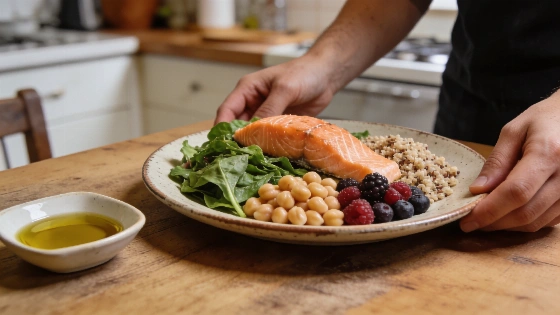
Vegetables, fruit, whole grains, legumes and healthy fats can make up an anti-inflammatory eating pattern. These foods may help with fullness and diet quality, but no single food or eating plan guarantees weight loss.
The practical test is not whether a food "burns fat." It is whether the overall pattern feels satisfying and is sustainable. Portions, calorie intake and activity still matter. The same goes for a shake or powder: look at serving size, calories, protein, fiber and added sugars before weighing its claims.
On a Nutrition Facts or Supplement Facts panel, check the serving size before comparing protein or calories. A scoop's listed values apply to that labeled serving-not necessarily to the amount you actually use.
What the evidence can and cannot tell us
Dietitian Sumaiya Ansari describes an anti-inflammatory diet as a way of eating, not a strict menu. It includes vegetables, fruits, whole grains, legumes, nuts, seeds, fish and unsaturated fats such as olive oil. It limits highly processed foods, refined carbohydrates and sugary drinks. This pattern overlaps with a Mediterranean-style diet. It does not mean any one ingredient treats inflammation.
An overview of 33 randomized trials with 3,476 participants reported lower levels of high-sensitivity CRP, IL-6 and IL-17 among people following Mediterranean-style diets than among those in control groups. The review found no significant effect on standard CRP, IL-10, TNF-α or total antioxidant capacity. The findings cover selected biomarkers, not proof of weight loss.
A 2026 research report also describes an association between stronger adherence to a Mediterranean diet and lower hematological inflammatory indices among adults in a weight-loss program. That adds to research on diet quality and inflammation. It does not show that the diet itself caused weight loss. For weight change, a sustained calorie deficit and replacing items such as sugary drinks and many ultra-processed foods may matter more than the "anti-inflammatory" label.
Vegetables, fruit, legumes and whole grains provide fiber and can help people feel full. NHS-oriented guidance cited in the research context sets practical benchmarks: at least five 80-gram portions of fruit and vegetables a day, and two portions of fish each week. One should be oily fish, at about 140 grams. These are general dietary benchmarks, not a personal weight-loss prescription.
Nine foods that fit the pattern
Ansari's list includes salmon, sardines or mackerel; berries such as blueberries, strawberries and blackberries; and leafy greens such as spinach. It also includes olive oil, walnuts or almonds, beans, lentils or chickpeas, oats or barley, turmeric and ginger, plus fermented foods such as yogurt or kefir. These are ingredients to build meals around, not a list of fat-burning foods.
Berries are one way to include fruit, but no variety is a weight-loss solution. As with the fruit comparison, choose what suits your preferences and eating routine.
These foods work as part of meals, not as isolated fixes. Legumes and whole grains add fiber. Fish, nuts and olive oil provide other nutrients. Portions and the rest of the meal still count. A shake or meal-replacement powder may be convenient, but it is not automatically equal to a meal made from varied whole foods.
How to read shake and powder claims
When comparing protein powders or ready-to-drink shakes, first check the serving size in grams and the calories per serving. Then compare protein with calories, along with added sugars, fiber and the ingredient list. Whey, casein and plant proteins such as pea or soy differ in source and formulation. If a blend does not disclose individual amounts, it is harder to tell how much of each ingredient a serving contains.
Sweeteners and fibers deserve a close look, too. Stevia, sucralose, sugar alcohols and added fibers such as inulin can affect taste and digestive comfort differently from person to person. "Gut health," "clean energy" and "detox" are marketing terms, not evidence on their own. Check whether the label names the ingredients and amounts behind the claim. If the product replaces a meal, ask whether its calories and nutrients suit that use. Compare cost per serving instead of relying on promises on the tub's front label.
For people managing weight, NIDDK weight-management guidance focuses on sustainable habits, not one special food. A shake may be convenient. Its value depends on what it replaces and whether it helps someone maintain an appropriate overall intake.
A pattern beats a "fat-burning" food
Ansari advises people to focus on their overall eating pattern, not one particular food. Build meals around minimally processed options and variety. Pay attention to portion size and total intake instead of expecting turmeric, berries or another single food to melt fat.
This article is for informational purposes only and is not a substitute for professional medical advice. Consult a healthcare professional with questions about a medical condition or a diet change related to treatment.
An anti-inflammatory eating pattern may support diet quality and fullness. Research suggests it can affect some inflammation markers. It is not a special weight-loss mechanism. Its value lies in helping make balanced eating more sustainable, not in promising results the evidence does not establish.