
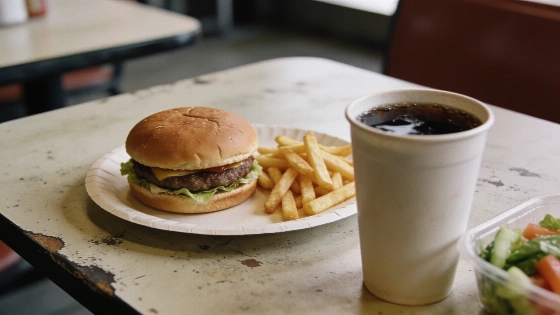
Visceral fat sits deep in the abdomen, around internal organs. Higher levels are linked with health risks. A burger or fried-chicken combo with fries and soda can bring several foods associated with visceral fat into one lunch.
The concern is the regular pattern, not one meal. Energy-dense foods and sugary drinks can take the place of vegetables and fiber.
The FDA's 50 g Daily Value for added sugars is a label reference for a 2,000-calorie diet, not a recommended health target. A large sugary soda can provide roughly 44-65 g, depending on serving size and formulation.
Why this combo can be a poor routine
Portion size can make the meal high in calories. Kelly Burgess, M.B.A., RD, LDN, says some fast-food combos can equal an entire day's worth of calories in one meal. A fried sandwich or cheeseburger with fries and soda can exceed 1,100 calories. The total depends on the items and portions. Such a meal may also provide less fiber, fruit, and vegetables than a more balanced lunch.
The drink can add a lot of sugar without making you feel as full as solid food. Medium fast-food sodas commonly range from 20 to 32 ounces, or about 591 to 946 mL. They may contain roughly 44 to 65 g of sugar. The amount varies by drink and size.
That can approach or exceed the FDA's 50 g added-sugars Daily Value. The FDA label guidance says the Daily Value is a comparison tool, not an individual prescription. WHO separately recommends keeping free sugars below 10% of daily energy. It says there may be additional benefit below 5%.
Fried foods and fatty processed meats can add saturated fat. Fast-food buns, sauces, fries, and drinks may be ultra-processed, depending on how they are made. Research links diets higher in ultra-processed foods and frequent sugar-sweetened beverage intake with greater visceral fat. Those links do not prove that one ingredient or meal causes a particular person's fat distribution.
Claims Check: No single lunch can be identified as the cause of visceral-fat gain. Evidence about sugary drinks and ultra-processed dietary patterns is associative, so frequency and the overall eating pattern matter more than treating one meal as determinative.
Build lunch around what the combo often lacks
Dietitians recommend starting with lean protein, such as chicken, tofu, fish, or legumes. Make nonstarchy vegetables a substantial part of the plate. Whole grains can add fiber. Options include quinoa, barley, brown rice, farro, or whole-wheat bread.
For packaged foods, compare serving sizes and nutrient amounts on the Nutrition Facts panel. The USDA FoodData Central database can help put the nutrient profiles of basic foods in context.
Busy days call for practical shortcuts. Ready-to-use staples can cut preparation time without relying on a full combo meal.
A ready-to-drink shake or powdered mix may be convenient. But "protein shake" does not automatically mean "balanced lunch." Check serving size, calories, protein, fiber, and added sugars together. Compare protein with calories instead of judging by a large protein number alone.
A protein powder may add protein without providing the fiber or range of foods found in a meal. Products marketed as meal replacements also deserve a close look. Check the Nutrition Facts or Supplement Facts panel. Claims such as "gut health" or "clean energy" do not prove an outcome. A proprietary blend can also make it hard to see the exact amount of each ingredient.
One lunch isn't decisive. But making a fast-food combo a routine may not support overall diet quality. When ordering, try replacing soda with water and choosing a fruit or vegetable side if one is available. Build the rest of lunch around protein and fiber.