
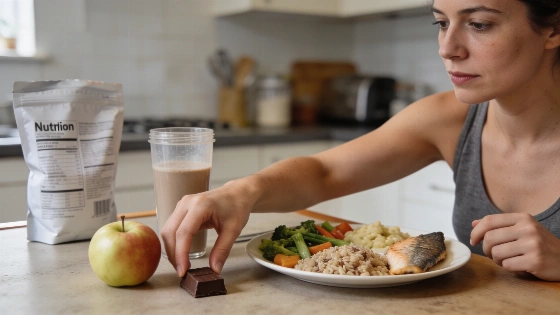
Jennifer Low, owner of JL Nutrition Clinic, told HuffPost UK that many people who worry about eating well already have a healthy diet. She says social media can make nutrition seem harder than it needs to be.
A healthy diet can include chocolate. Low says the bigger question is whether someone's overall eating pattern is nourishing, varied and flexible, rather than whether every bite is "optimal."
Protein grams alone do not show whether a shake can replace a meal. Check the full serving's calories, fiber, added sugars and other nutrients, and compare those figures with what you need from that drink.
Look at the pattern rather than single foods
Low points to a Mediterranean-style pattern. It includes whole grains, fruit and vegetables, lean meats, fish including oily fish, nuts, seeds, pulses and olive oil. The USDA's Eat Real Food toolkit offers practical advice on building meals with a range of foods. The American College of Cardiology's 2026 scientific statement also focuses on overall diet quality, rather than judging a diet by one food or nutrient. It names Mediterranean and DASH patterns as examples.
One food cannot decide. Foods outside a Mediterranean-style pattern can still fit into a healthy diet. Enjoying food is part of eating well, not a departure from it. The same idea applies to food quality and calories: a single ingredient or nutrient does not tell the whole story.
For shoppers, a claim on the front of a package or a high protein number cannot show on its own that a shake is a balanced meal or a good fit. Check the serving size, calories, protein source, fiber and added sugars on the Nutrition Facts or Supplement Facts panel. For powders, compare the price per serving using the labeled serving size. Check for specific ingredient amounts, too. A proprietary blend may not disclose each ingredient's dose.
Signs your eating routine is working
Low says signs of a healthy routine can include functioning well physically and having regular bowel movements. She also says to watch for signs of nutrient deficiencies. Eating enough food regularly, having plenty of variety and sleeping well are other useful signs. Going to bed overly hungry or overly full may suggest the routine needs attention. These are broad signals, not a diagnosis. If symptoms persist or you are concerned about deficiencies, seek advice from a qualified health professional.
Flexibility matters beyond the plate. A healthy pattern leaves room to enjoy food without guilt and share meals with friends and family without choosing based on calorie counts. It can also adapt when plans change. Low advises against calling some foods "treats." That label can divide foods into supposedly good and bad choices.
Low recommends intuitive eating: paying attention to hunger and preferences, and working toward a less adversarial relationship with food. PubMed reviews of intuitive eating examine its links with psychological well-being. They do not guarantee an individual outcome or replace professional support when eating feels distressing.
These signs are more practical than chasing a flawless menu. Clemson's nutrition guidance also says healthy eating does not require a "perfect plate" at every meal. Low puts nourishment and physical well-being ahead of rigid rules, along with a more relaxed relationship with food. If one area feels worth changing, she suggests small steps, such as gradually increasing fiber. Anyone who often worries about eating or feels concerned about their relationship with food should speak with a professional, such as a GP.