
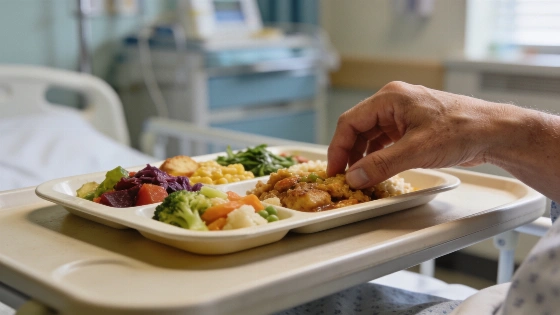
A 2024 report found that patients dissatisfied with hospital food were 2.7 times more likely to report dissatisfaction with their overall care, 1.4 times more likely to experience complications and 1.9 times more likely to have a delayed discharge.
Those are reported associations, not proof that meal dissatisfaction causes complications or delays. The numbers raise a question about food quality.
Tampa General Hospital is the first healthcare organization recognized by Joint Commission's new Commitment to Healthy and Enticing Food™ program. CHEF brings hospital meals into a wider conversation about care quality. It focuses on food that is nutritious, appealing and suited to patients' needs.
CHEF evaluates food-service practices across three tiers; it does not certify a particular meal, nutrition shake or ingredient formula. The program's criteria include dietitian involvement, improvement work and, at higher levels, purchasing and sourcing practices.
A tiered framework for changing food service
CHEF is voluntary and open to Joint Commission-accredited organizations that provide food and nutrition support. Eligible settings include hospitals, critical access hospitals, behavioral healthcare organizations, nursing care centers and assisted living communities.
The program has three tiers, numbered Tier 3, Tier 2 and Tier 1. Tier 3 calls for dietitian involvement, patient education and at least one nutrition-improvement project. Tier 2 adds interdisciplinary teams, shared goals and improvements to purchasing. Tier 1 expects stronger leadership involvement, more advanced ingredient sourcing and nutrition education for the community.
Joint Commission developed the program with chef Geoffrey Zakarian. He is expected to contribute quarterly webinars, newsletters, blogs and direct consulting for participants. His guidance may help with menu design and flavor. Plans are only a start. Recognition will depend on whether organizations turn them into food patients can and will eat.
Claims such as healthy or enticing do not, by themselves, tell a patient what a meal contains or whether it fits their needs. The FDA's Nutrition Facts guidance illustrates how disclosed nutrients can support comparisons for packaged foods, but it does not establish the nutritional quality or clinical suitability of a hospital meal.
Food quality has consequences beyond the menu
A separate study in The Journal of Parenteral and Enteral Nutrition found that 51% of hospitalized patients ate half or less of their meals. The rest went back to the kitchen as waste. A carefully designed meal has limited value if patients cannot or do not eat it. The finding alone does not show that uneaten meals cause poorer outcomes.
According to Fierce Healthcare, Tampa General had already partnered with Zakarian on patient menus and was an early signatory to a voluntary HHS hospital food pledge. The hospital said it hoped its recognition would encourage other organizations to participate. These steps give context to its CHEF recognition, but do not show how much patients eat or whether clinical outcomes change.
The same principle applies to nutrition shakes and meal replacements: a headline claim is not a substitute for the panel. Compare serving size, calories, protein, added sugars and ingredient amounts. Check whether the amounts are fully disclosed or hidden in proprietary blends. The USDA FoodData Central database offers food-composition reference data. It cannot verify what a hospital serves or replace a product's own Nutrition Facts panel.
CHEF puts hospital food service in view as part of nutrition and patient experience, rather than treating it only as catering. Its value will depend on transparent implementation and useful measures, such as meal acceptance, waste, purchasing practices and patient feedback. Recognition alone is not enough.