
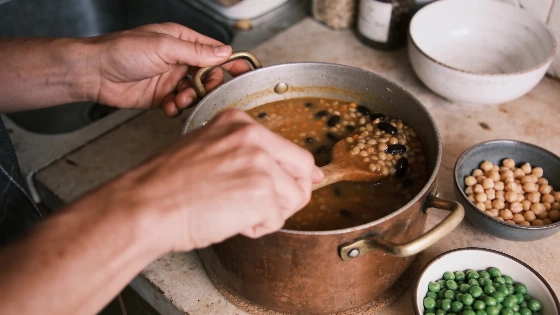
A cup of cooked beans can appear to deliver more fiber than a half-cup because it contains twice the food.
The serving size can change the comparison before nutrition does. A full cup of cooked lentils has about 15.6 grams of fiber; black beans have about 15 grams, and chickpeas about 12.5 grams. A half-cup provides roughly half as much. Protein estimates also vary by food entry and preparation. Check the serving weight and whether the figure describes cooked, drained or canned food.
On an equal 100-gram basis, USDA reference entries list cooked lentils at about 7.9 g fiber and 12.3 g protein, black beans at 8.7 g fiber and 15.1 g protein, and chickpeas at 7.6 g fiber and 19.8 g protein. Water content and preparation can shift these figures.
Four options for cooler-weather meals
Cooked lentils fit into soups or grain bowls. They also work in salads with seasonal vegetables. USDA reference values per 100 grams are about 7.9 grams of fiber and 12.3 grams of protein, though varieties and cooking methods can shift the figures. USDA FoodData Central lets shoppers check a specific food entry instead of treating one serving estimate as universal.
Green peas offer another convenient option. A commonly cited estimate puts both protein and fiber at about 8 grams per cup, but fresh peas may differ from frozen ones, and cooked entries can vary too. Frozen peas can go straight into soups or casseroles. They also work in pasta dishes.
Chickpeas add texture to soups and salads, as well as grain bowls. Roasting them makes a snack. A half-cup is often listed at roughly 6 grams of fiber; cooked USDA reference data show about 7.6 grams of fiber and 19.8 grams of protein per 100 grams. The amount in a household half-cup depends on how densely the chickpeas are packed and whether they have been drained.
Claims Check: The FDA's 28-gram Daily Value for fiber is a reference used on Nutrition Facts labels, not a personalized target for every shopper. Federal dietary guidance relates fiber intake to calorie needs, so a label percentage should be read as a comparison tool rather than a guarantee of an individual's daily requirement.
Pantry staples and label context
Black beans work in chili or soups. They also anchor stews and vegetarian burgers. Cooked reference entries provide about 8.7 grams of fiber and 15.1 grams of protein per 100 grams. A cup contains more than a half-cup because it is a larger portion. Canned beans are convenient, but draining and rinsing changes the amount being measured. Sodium content is worth checking on the Nutrition Facts panel.
Federal dietary guidance uses about 14 grams of fiber per 1,000 calories as a planning benchmark. The FDA label's Daily Value is 28 grams for a 2,000-calorie diet. Actual needs vary with calorie intake and personal factors. Federal dietary guidance provides the broader context.
When comparing these foods with a nutrition shake or protein powder, check the serving size in grams and the protein per serving. Calories and added sugars matter too. Labels should identify allergens, along with the type and amount of added fiber. Inulin and chicory-root fiber are not the same as fiber naturally present in beans. A proprietary blend may list its total weight without revealing each ingredient's dose. Treat claims such as "gut health" as a reason to inspect the formulation, not as proof of an effect.
For meal planning, Shake Nutrition's planned lunch ideas offer another practical reference. Fall meals can include lentils or peas, with chickpeas and black beans as other options. Compare the same serving weight and preparation, and check package labels for canned or packaged versions.
Nutrition shakes and powders answer a different set of label questions than whole beans do.