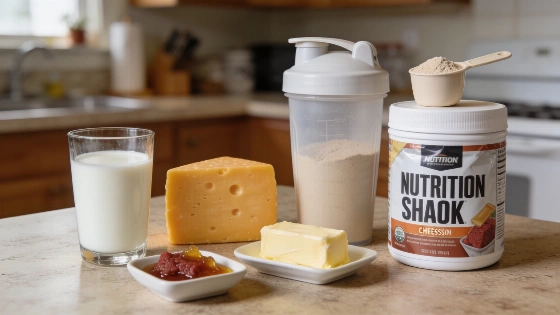
A Nutrition Facts panel gives shoppers a concrete starting point: the amount of saturated fat listed for one serving. That number can be checked against the serving size and the portion actually consumed.
A claim that a "new US food pyramid" prominently features butter and beef tallow has circulated online. The graphic also includes cheese while retaining a saturated-fat limit. Research available for this article did not establish that it is an official or current US government graphic. Nor did it verify a government decision about those foods. An image circulating online does not, by itself, establish nutrition policy.
The same uncertainty surrounds a reported calculation: three dairy servings provide 17 grams of saturated fat, rising to 23-24 grams with a spoonful of cooking fat. The available primary-source material did not independently confirm those figures or the accompanying quotations attributed to Harvard nutrition professor Frank Hu. They should not be presented as verified Harvard findings or official guidance.
Verification check: the available evidence does not confirm the pyramid's official status, the cited dairy-and-fat calculation, or the quotations attributed to Frank Hu.
For context, 10% of the calories in a 2,000-calorie diet works out to about 22 grams of saturated fat per day, using 9 calories per gram of fat. That is a conversion of the stated percentage. It does not establish that particular dairy portions add up to 17 grams. The actual amount depends on the products and serving sizes being counted, as well as the recipes used.
For shoppers comparing nutrition shakes or meal-replacement powders, the useful check is the panel, not the product's marketing or food category. Note the serving size and saturated fat per serving, then check how many servings are actually used. A shake made with dairy ingredients can differ substantially from one made with coconut-derived fats. The ingredient list and Nutrition Facts panel show what the manufacturer declares.
Claims Check: the FDA's Nutrition Facts guidance gives saturated fat a 20-gram Daily Value on a 2,000-calorie diet. That label reference helps compare products, but it does not validate the unconfirmed pyramid story or the specific dairy calculation.
What a food graphic can tell you
A pyramid illustration is not a serving plan unless it defines portions and frequency. For packaged foods, compare the grams of saturated fat per serving with the serving size in grams or milliliters. Calories and protein offer further points of comparison, while added sugars appear elsewhere on the panel. If a powder's scoop is larger than the labeled serving, or a prepared shake uses milk instead of water, the amounts consumed will differ from the panel's stated values.
For protein products, compare protein grams with calories and serving weight. Check the protein source, such as whey or casein, and look for soy or pea in other formulas. The declared allergens matter, too. These details show what a product is designed to provide; they do not establish that one formula is universally better. A proprietary blend can make comparisons harder when the label gives a combined blend weight without disclosing the amount of each ingredient.
Total fat and fat type raise different questions
The supplied account also attributes criticism of a 30%-of-calories total-fat limit to Harvard experts and refers to a 2023 WHO recommendation. The available WHO results did not verify that specific recommendation. The cited Harvard statements also could not be independently confirmed, so neither attribution is established here.
The account points to a 2018 New England Journal of Medicine analysis of the PREDIMED trial. The study examined a Mediterranean dietary pattern supplemented with extra-virgin olive oil or nuts and reported cardiovascular outcomes. It does not show that total fat alone caused any difference. Nor does it establish that high-saturated-fat foods have the same effects as unsaturated fats. The study is indexed in PubMed under record 29897866.
When checking a product, start with the saturated fat in the portion actually consumed and compare its protein amount with the serving's calories. Check whether ingredient quantities are disclosed or grouped in a proprietary blend. A blend may list its combined weight without revealing each ingredient's amount.