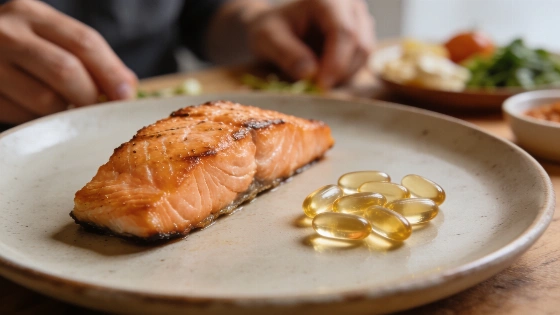
On a fish-oil bottle, the front-panel milligram figure can describe total oil, not the EPA and DHA a serving supplies. Salmon provides those omega-3 fats alongside protein and other nutrients. Fish oil concentrates the fats, but it does not replace the rest of the food. The amount of EPA and DHA in salmon varies, and the available evidence here does not verify a specific figure.
Fish-oil weight is not the same as EPA plus DHA. Compare the disclosed EPA and DHA amounts per serving, not just the headline milligrams of fish oil.
What salmon adds beyond omega-3s
Salmon can bring fish, protein and omega-3 fats to a meal. The FDA advises people who are pregnant or breastfeeding to eat 8 to 12 ounces per week of lower-mercury fish. The same advice applies to people who might become pregnant. Its fish consumption guidance details the choices and serving amounts. That recommendation concerns fish as food, not omega-3 supplements.
Claims Check: A brain-health benefit is not established by a product's omega-3 headline or by the presence of EPA and DHA alone. The evidence available here does not independently verify that eating two servings of fish weekly prevents dementia or Alzheimer's disease.
How to compare omega-3 products
Compare the listed EPA and DHA amounts, then check the serving size. Work out the price per serving. A bottle's total oil weight or a large number on the front can obscure how much of each omega-3 the serving provides. Check the ingredient list and allergen information, especially if fish is a concern.
People who avoid fish can get ALA from chia and ground flaxseed. Walnuts also provide it. So do hemp seeds and edamame. ALA is a different omega-3, and the body converts only a limited amount into EPA and DHA. Algae oil is another product category that can provide EPA and DHA. Check its Supplement Facts panel rather than assuming every algae formula contains the same amounts.
More is not automatically better. The same label-reading principle applies to protein. Compare the disclosed amount with your needs, and consider asking a qualified health professional about personal circumstances, medications or pregnancy.
Salmon brings more than omega-3 fats to a meal. Fish oil and algae oil are more targeted alternatives. Neither a nutrition label nor a marketing phrase such as "brain support" proves that a product prevents cognitive decline. Check the amount per serving, and make sure any claim matches the evidence.