
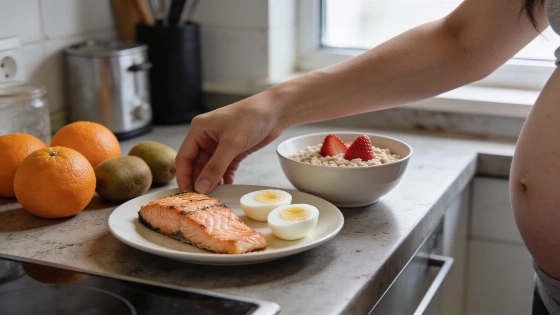
A food thermometer gives clearer answers than color when fish or eggs are cooking.
Cutting out whole food groups is not the only way to manage food risks during pregnancy. Fruit, lower-mercury fish, fortified breakfast cereal and fully cooked eggs can provide useful nutrients. The practical questions are what to choose, how to prepare it and what the label actually tells you.
Egg yolks supply choline, which helps build cell membranes and supports the production of acetylcholine, a chemical that allows nerve cells to communicate. The recommended amount during pregnancy is 450 milligrams a day. Two large hard-boiled eggs provide about 294 milligrams. Many prenatal vitamins contain little or no choline.
Two large hard-boiled eggs provide about 294 mg of choline-roughly 65% of the 450 mg daily pregnancy recommendation. Check serving sizes when comparing packaged foods: nutrient amounts are meaningful only when the portions are comparable.
Preparation and food choice matter
Fish warnings have a sound basis, but avoiding all fish can mean missing DHA, an omega-3 fatty acid used to build a baby's brain and eye tissue. The FDA and EPA recommend two to three 4-ounce servings a week from their "Best Choices" list. Salmon is on the list, as are sardines and freshwater trout. It also includes shrimp and canned light tuna. The FDA and EPA's fish advice for pregnancy gives shoppers species-specific guidance.
Species and preparation both count. Avoid bigeye tuna. Swordfish is also on the avoid list, as are marlin and shark. Orange roughy, tilefish and king mackerel are on it too. Cook fish to 145°F, or 63°C, and choose cooked fish rather than raw options during pregnancy. Egg dishes without meat or poultry, such as a vegetable frittata, should reach 160°F, or 71°C. A food thermometer is more reliable than judging doneness by color. The USDA temperature chart lists safe cooking temperatures.
For eggs, cook both whites and yolks until firm. If a recipe calls for raw or lightly cooked eggs, use pasteurized eggs or pasteurized liquid egg products. Wash hands for at least 20 seconds. Keep raw and ready-to-eat foods separate, and do not reuse unwashed utensils or dishes that touched raw food. Refrigerate cooked leftovers and takeout within two hours. Use refrigerated leftovers within three to four days.
Look beyond a food's reputation and its front label
Fruit's natural sugar can prompt concern about gestational diabetes, but a meta-analysis found that higher fruit intake before or during pregnancy was associated with a modestly lower risk. That finding does not establish that fruit prevents the condition. Strawberries provide vitamin C. Oranges do too, as does kiwi. Vitamin C supports collagen production and helps the body absorb iron from plant foods.
Fortified cereal can be another useful option, even if it comes in a box. Pregnancy raises the daily iron requirement to 27 milligrams as blood volume expands. Iron helps make hemoglobin, which carries oxygen to the body's tissues and the growing baby. Fortified cereals can also provide folic acid. It is important before conception and in early pregnancy for preventing neural tube defects affecting the brain and spine.
Fortification varies, so check the cereal's Nutrition Facts panel for iron and folate. Look at fiber and added sugars too, and note the serving size before comparing products. The same label-first approach helps when considering a nutrition shake or protein powder: compare protein and calories per serving, check added sugars and allergens, and distinguish declared amounts from vague blend language. A shake's front-of-pack "superfood" or "cleanse" messaging does not tell you how much of each ingredient is present. It does not demonstrate a health benefit.
For protein powders and meal-replacement shakes, the ingredient list and serving details matter alongside the headline protein number. Whey and casein have different ingredient profiles. Plant proteins such as pea or soy have their own allergen profiles. Shoppers can check whether a product suits their needs rather than assuming that a particular source is automatically better. During pregnancy, supplements and fortified products are not substitutes for individualized advice from a qualified healthcare professional.
Strawberries added to fortified cereal provide vitamin C that helps the body absorb the cereal's iron.