
Packaged glazes and seasoning mixes can change the sodium and added-sugar content of this dinner. Check the Nutrition Facts panel, then compare its serving size with how much you actually use.
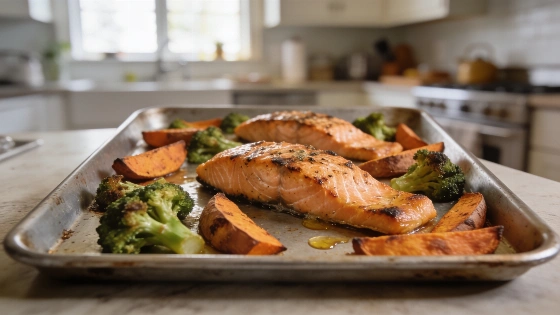
Salmon, potatoes and vegetables give you a flexible starting point. Salmon provides protein, while the vegetables and potatoes add variety. The final nutrition depends on the portions, preparation and any sauces or seasonings.
Oil, lemon, herbs and spices add flavor. Broccoli, green beans, Brussels sprouts or asparagus can roast alongside the fish and potatoes.
An ingredient list alone does not establish exact omega-3, vitamin D, potassium, fiber or sodium totals for this dinner. Portions, product choices and added seasonings all affect the final numbers.
Build the plate around salmon and vegetables
Salmon is one way to include fish as a protein food. USDA material on building a balanced eating pattern offers general guidance, not a specific endorsement of salmon or sheet-pan meals. It recommends prioritizing vegetables, fruits, protein foods and healthy fats while limiting highly processed foods, added sugars and refined carbohydrates.
Salmon is commonly described as a source of omega-3 fats and vitamin D, but the amounts vary with the fish and portion size. Trout, cod or halibut can work for people who prefer another fish, though they should not be assumed to have the same nutrient profile.
Claims Check: A meal's ingredients do not prove that it will prevent or treat a health condition. USDA guidance addresses overall eating patterns; it does not certify this particular recipe or establish its nutrient totals.
Broccoli, green beans, cauliflower, peppers and red onions can all go on the pan. Cooking time varies by vegetable and piece size, so cut ingredients to cook at a similar pace and check them for doneness.
Balance the plate and check the seasoning
Potatoes and sweet potatoes can both fit into the meal, and leaving the skin on adds texture. Their nutrient contributions depend on the type and amount served. For packaged potato seasoning, marinades or a glazed fillet, FDA sodium label guidance explains how to compare products. Check both the serving size and the sodium amount.
Roasted potatoes with a modest amount of oil are different from fries. Olive or avocado oil, lemon, vinegar, herbs and spices can add flavor. Plain fish gives the cook more control over added ingredients, but butter, oil and sauces still contribute to the finished meal, so amounts matter.
The original recipe guidance suggests about 3 to 4 ounces of cooked salmon, vegetables and roughly a cup of roasted potatoes as a starting portion. Individual needs vary. These are serving suggestions, not a promise of a particular nutrient or calorie total. Making extra vegetables is one simple way to shift the balance of the plate.
This dinner does not replace the rest of a person's eating pattern, and no single plate guarantees a heart-health outcome. Its practical appeal lies in familiar ingredients, flexible vegetable choices and control over seasoning. For meal planning beyond dinner, make-ahead breakfast ideas offer another option for the week.