
U.S. adults get about 16 grams of fiber a day on average, below common recommended amounts. A federal benchmark is 14 grams per 1,000 calories, though individual needs vary.
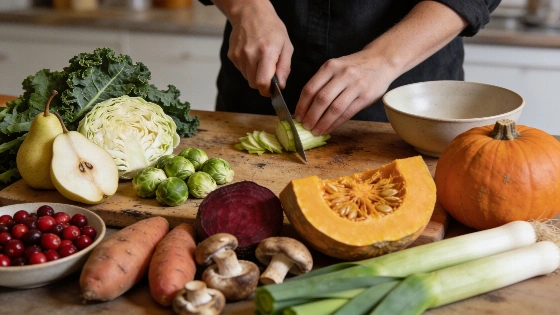
Fall produce offers plenty of ways to add variety to familiar meals. Pears, kale and squash can go into soups, salads or grain bowls. Mushrooms and beets bring their own flavors and uses. The USDA's dietary guidance emphasizes fruits, vegetables, whole grains and legumes as part of a healthy eating pattern. It also encourages people to limit added sugars and highly processed foods.
A medium raw pear weighing about 178 grams provides roughly 5.5 grams of fiber-nearly 20% of the FDA Daily Value of 28 grams.
Fiber-rich picks for everyday meals
A medium pear has about 5.5 grams of fiber, according to USDA FoodData Central. That's close to one-fifth of the 28-gram Daily Value on U.S. labels. The FDA explains how to read that Daily Value. For a shake or meal-replacement powder, check the fiber grams per serving and the serving size. Inulin and chicory root are fiber sources, but the ingredient list alone won't tell you how much the product contains.
Check the label.
Cranberries add a tart note to meals. Nutritionist Anne Danahy suggests blending them with orange, nuts and sweetener for relish, or adding them to wild rice and stews. Berries can contribute fiber. Sweetened dried cranberries and other cranberry products can differ considerably in added sugar, so check the package if that matters to you.
Kale and cabbage fit easily into savory meals. Gabbie Ricky of FC Dallas points to kale's calcium and vitamin K. Janelle Leatherwood suggests adding chopped leaves to soups, pasta, eggs or quinoa bowls. Amy Brownstein says a cup of shredded cabbage provides close to 30 milligrams of vitamin C, about 33% of the Daily Value. She also notes its vitamin K, vitamin A, lutein and zeaxanthin. Serve cabbage raw in slaws and salads, or cook it in soups, stews and pasta.
Foods are easier to use when they fit meals people already make. For more practical ideas on simplifying healthy meals, see this meal-prep guide.
Roast, blend or build a meal around them
Leatherwood recommends roasting Brussels sprouts with olive oil, maple syrup and sea salt for people who have disliked them before. The sprouts provide vitamins C and K. Anne Danahy also points to laboratory research on compounds in these vegetables. Lab findings do not prove that eating Brussels sprouts prevents cancer in people.
Pumpkin provides vitamin A and fiber. Its purée works in smoothies, oatmeal or soup. Other winter squash offer beta carotene and minerals such as potassium, calcium and magnesium. Leatherwood suggests adding spaghetti squash to pasta or using it in place of pasta. She also recommends cinnamon with butternut squash and serving grain and protein fillings in acorn squash halves. Check the ingredient list on canned pumpkin. Plain pumpkin and sweetened pie filling are different products.
Sweet potatoes provide fiber. They can replace a baked russet potato, form the base of a grain bowl or become air-fried fries. Beets add natural sweetness and color. Ricky suggests roasting them with carrots and sweet potato, blending them into smoothies or adding pickled beets to salads. Leeks offer a milder, sweeter alternative to onions. Wash them well, sauté the tender middle and save the tougher tops to flavor broth. Remove the tops before serving.
Grapes and mushrooms offer different options. Lauren Manaker favors Autumn Crisp grapes for their crisp texture. Research into grapes and health does not mean that eating one variety guarantees benefits. Mushrooms add savory umami to soups and hearty dishes. Manaker says research has explored links between mushroom nutrients and cognitive function. Some varieties contain ergothioneine, a compound under study for its relation to oxidative stress and inflammation. These are areas of research, not promises about what a serving will do.
Use seasonal ingredients in meals you enjoy and can repeat. Pears and sweet potatoes provide fiber, while greens and squash work in many dishes. If a powdered drink or meal replacement is part of your routine, check the amounts per serving and the full ingredient list. Don't rely on claims such as "cleanse" or "metabolism booster". A varied plate is a more useful goal than expecting a guaranteed effect from one food.