
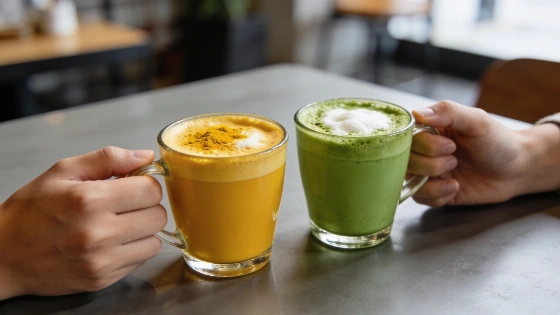
Turmeric and matcha lattes look bold and get plenty of buzz, but neither is a cure-all for inflammation. The real issue is whether you get enough of their key plant compounds in a typical cup to matter-especially compared to the much higher doses used in research.
A typical turmeric or matcha latte contains far less of the active compounds (curcumin or EGCG) than the amounts used in clinical trials-often less than 10% of research doses per serving.
Curcumin has stronger clinical backing for fighting inflammation than matcha's catechins. But there's a catch: the amount in your latte is much lower than what studies use. Clinical trials on curcumin often use 500-2000 mg of concentrated extract daily. A latte made with regular turmeric powder might only give you 50-100 mg of curcumin. The same goes for matcha-one latte has just a small share of the EGCG found in green tea extract supplements, which most studies rely on.
Both drinks can fit into a balanced, anti-inflammatory diet, but neither is a fix on its own. What you eat overall matters much more than any single drink. As reported earlier, the health impact of a food or drink depends on your whole eating pattern, not just one ingredient.
Claims Check: While both turmeric and matcha lattes are marketed for anti-inflammatory benefits, the NIH and FDA caution that neither drink provides clinically proven treatment for inflammatory diseases. The actual health impact depends on the form, dose, and bioavailability of the active compounds, which are much lower in lattes than in research settings.
If you check labels, you'll notice most commercial latte mixes don't list the exact milligrams of curcumin or EGCG per serving. Ingredient lists might mention "turmeric powder" or "matcha green tea" but rarely say how much of the active compounds you get. This lack of detail makes it hard to compare products or trust marketing claims. If you want real anti-inflammatory effects, look for brands that show third-party testing or list standardized extract content, and always check NIH supplement guidance for safe intake levels.
One last thing: more isn't always better. High doses of green tea extracts have been linked to rare but serious liver problems, and too much curcumin can interact with some medicines. For most people, enjoying a turmeric or matcha latte as part of a varied, plant-forward diet adds flavor and variety-but it's not a replacement for medical care or a balanced nutrition plan.