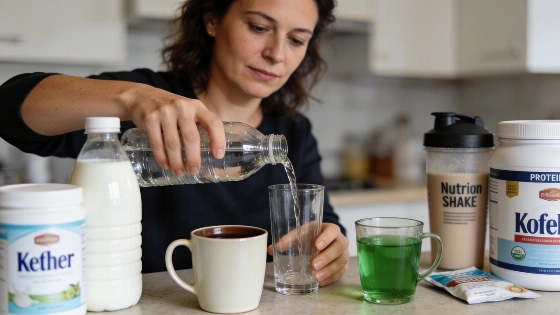
Water supports digestion and circulation. It also helps regulate body temperature, physical performance and cognitive performance. Research has linked hydration patterns with health outcomes, but those associations do not show that drinking more water alone prevents disease or slows aging.
No drink is a shortcut to a longer or healthier life. Beverages fit into a wider routine that includes movement and sleep. Stress management, social connection and preventive care matter too. A drink's value also depends on what it adds to the overall diet.
A 12-fluid-ounce serving of brewed coffee can contain about 113-247 mg of caffeine. Serving size and brewing method matter, so counting cups alone may not estimate caffeine intake accurately.
Hydration and antioxidant-rich choices
Water is an easy starting point. Dietitian Diana Dibblee recommends having a glass with meals and drinking throughout the day rather than waiting until thirst sets in. A reusable bottle or reminders can make the routine easier to maintain.
In one cohort study of more than 47,000 women, regular coffee drinking was linked to a greater likelihood of healthy aging. Coffee contains chlorogenic acids and other compounds with antioxidant properties. But the association does not establish that coffee caused the outcome. Other dietary, health and lifestyle factors may help explain it.
Adding protein to coffee is a separate nutrition choice. A previous analysis by Shake Nutrition found that convenience alone does not give protein coffee a unique nutritional edge. When comparing a protein coffee or ready-to-drink shake, check the protein grams against the calories. Then look at serving size and added sugars. A protein product is not automatically a meal replacement; its Nutrition Facts or Supplement Facts panel shows what it provides.
Caffeine matters too. The FDA says up to 400 mg per day is an amount not generally associated with negative effects for most healthy adults. That is a general benchmark, not a recommended target or universal limit. A 12-ounce brewed coffee may contain about 113-247 mg, depending on serving size and preparation. Sensitivity varies. Caffeine can contribute to insomnia or anxiety, and it can also cause a faster heartbeat, shakiness, nausea or headache. People who are pregnant are generally advised to consider a lower limit of about 200 mg daily. FDA guidance notes that tea and some soft drinks contribute caffeine as well. A 12-ounce serving has about 71 mg in black tea and 37 mg in green tea on average. Soft drinks can vary considerably by brand and recipe.
Claims Check: Observational links between coffee and healthy aging do not prove that coffee causes the outcome. The FDA's 400 mg daily figure is a general benchmark for most healthy adults, not a goal, and caffeine sensitivity and serving amounts vary.
If caffeine affects sleep, switching to decaffeinated coffee later in the day may be worth considering. Decaf still contains other coffee compounds, but neither regular nor decaffeinated coffee is a guaranteed healthy-aging intervention.
Green tea contains polyphenols such as EGCG, which has been studied for antioxidant properties and possible effects on cellular health. Research has examined potential effects on oxidative damage and inflammation. It has also looked at blood pressure and blood sugar regulation. Preliminary findings do not establish a guaranteed benefit for an individual. Green tea contains caffeine, so factor it into daily intake rather than treating it as caffeine-free.
Milk and kefir bring nutrients; labels add context
A cup of dairy milk provides nearly 310 milligrams of calcium, roughly one-third of the recommended daily intake, as well as protein. Adequate calcium is one part of supporting bone health. An analysis found small improvements in hip and spine bone density among adults who drank milk, alongside reduced markers of bone breakdown. Milk is not a standalone fix.
Milk can add calcium and protein to breakfast or a shake. For a ready-to-drink shake or powdered mix, compare protein grams with calories on the panel. Check serving size and added sugars too. With powders, check how many grams are in a scoop and whether the product is sold as protein supplementation or as a meal replacement. Those categories are not interchangeable just because both contain protein.
Kefir combines protein and calcium with live microorganisms commonly described as probiotics. Research suggests possible effects on gut and metabolic health, including among some people with metabolic conditions. Those findings do not prove kefir prevents or treats disease. Treat claims such as "gut health" as claims, not proof. Check the product's ingredients and serving information, then weigh the wording against the strength of the evidence.
When comparing flavored kefir or powdered drink mixes, start with the Nutrition Facts panel. Check serving size and calories, then look at added sugars and protein. Ingredient lists can reveal sweeteners such as stevia. They may also include sucralose or sugar alcohols. Fibers such as inulin or chicory root can appear on the label too. These ingredients may suit some shoppers, while others may experience digestive discomfort. A "clean" or "superfood" label does not replace checking amounts and the full ingredient list.
Dietitian Lotta Andonian suggests using kefir in place of liquid in smoothies. It can also go with cereal or overnight oats. She recommends chia pudding as another option, or serving kefir alongside breakfast such as peanut butter toast. For a shake, the practical question is whether it complements the meal and fits a person's nutrition needs. Marketing promises of a cleanse, detox or metabolism boost do not answer that.
Drinks fit into a wider routine
Regular activity matters. Resistance training helps maintain muscle and strength. Walking supports mobility, while cardiovascular exercise supports heart health and endurance. Consistent, quality sleep matters too. Research associates seven to nine hours with healthier aging; both shorter and longer sleep have been linked to greater chronic-health risks.
Social connection and stress management also matter. Preventive care is part of the picture. Dietitian Lotta Andonian recommends discussing appropriate tests with a health care provider. She also recommends monitoring blood pressure. Blood work can check lipids and insulin resistance. It can also identify vitamin deficiencies.