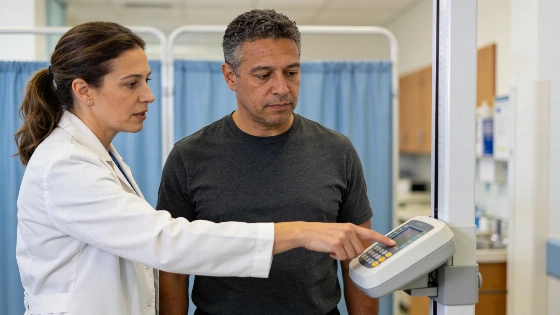
More than 100,000 people are on the organ transplant waiting list. Transplant dietitians work with patients at each stage, from evaluation through waitlist care, hospital recovery and follow-up.
Eligibility depends on more than BMI
A donor candidate's weight can affect surgical eligibility, but it is only part of the assessment. Dietitians review nutrition and body composition. They also assess physical function to help living donors and transplant recipients prepare for surgery and recovery.
Potential living kidney or liver donors need a body mass index, or BMI, of 32 or less for surgical safety. Dietitians can help candidates work toward that goal. Some may qualify after the team reviews their overall health.
For transplant recipients, the team considers weight alongside a person's history. It checks muscle and body fat levels, then assesses functional status. A body-composition scan adds information beyond weight or BMI. Strength exercises and a six-minute walk test can reveal frailty or limitations that may affect surgery and recovery.
The caution against reducing nutrition to one number also appears in an earlier analysis of evidence-led guidance.
Preparing for surgery and supporting recovery
Before surgery, dietitians assess calorie needs and nutrition concerns. They set weight goals when needed, then discuss whether patients can follow relevant diet goals and restrictions. Patients generally have an initial appointment, followed by visits every three to six months for nutrition concerns. Those on the waitlist have yearly visits. Patients who need significant weight loss may also work with the bariatrics team.
After surgery, patients need enough calories and protein to support healing. Adequate fluids matter too, especially for kidney function. Dietitians explain food safety precautions for people taking immunosuppressive medication. They also discuss foods that can interact with anti-rejection drugs.
Eating can become difficult during recovery. Pain medication may get in the way. Reduced strength and changes in how food tastes can also make nutrition goals harder to meet.
Follow-up continues after the transplant
Patients receive nutrition education in the hospital. A follow-up around two weeks after surgery can take place by telehealth, with further visits as needed. Dietitians monitor weight changes. Medication intolerance or higher calorie and protein needs can contribute to weight loss. Improved appetite and fewer dietary restrictions can lead to weight gain.
Nebraska Medicine's transplant team includes dietitians and physicians. Nurse coordinators work alongside financial coordinators. Social workers coordinate with pharmacists. Psychologists and other specialists are also part of the team. People seeking information about the program can call 800.401.4444. Those wishing to refer themselves can start with the transplant center referral form.