
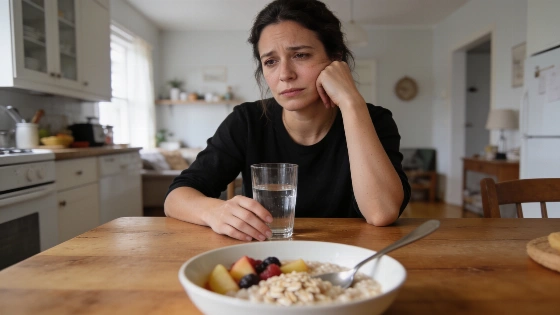
Constant thirst and frequent urination can point to diabetes, especially when they persist. Hunger, fatigue, unexplained weight loss and blurred vision can also occur. Symptoms aren't proof.
For a nutrition shake, compare the serving size with calories, protein, total carbohydrate, fiber and added sugars on the label. Those numbers describe the product more clearly than a front-of-pack claim, but they cannot predict an individual glucose response.
Thirst and headaches need context
When glucose stays high, the body may remove excess glucose through urine. That can contribute to frequent urination and thirst. These symptoms have many possible causes. They do not prove that fruit, grains or another specific food caused a glucose problem.
A headache is less specific. Registered dietitian and diabetes care and education specialist Sheila Patterson says research has not established a direct cause-and-effect link between glucose spikes and headaches. Dehydration and other factors can also contribute. A headache after a meal cannot confirm a glucose change.
Claims Check: Diabetes is diagnosed with laboratory testing, not by how a meal feels. For nonpregnant adults, diagnostic thresholds include an A1C of 6.5% or higher, fasting glucose of 126 mg/dL or higher, or a two-hour oral glucose tolerance result of 200 mg/dL or higher; results are generally confirmed with repeat testing.
Meal balance can shape hunger and energy
Feeling hungry soon after eating can have several explanations. It is not a reliable sign that blood glucose has dropped. Protein can help with fullness, and fiber generally slows digestion and carbohydrate absorption. Neither guarantees a particular glucose response. The CDC recommends fiber sources such as vegetables, fruit, beans, whole grains, nuts and seeds. Overall carbohydrate portions still matter. Hunger alone proves little.
An energy dip after a meal is also nonspecific. Quickly digested or refined carbohydrates may raise glucose more rapidly for some people. But ingredients that sound "clean" or "functional" do not show how a whole meal will affect an individual. Oatmeal with fruit or whole-grain toast with fruit may be nutritious choices. Portion size and the other foods in the meal affect its overall composition.
When comparing shakes, first check whether the product is sold as a protein powder or a meal replacement. Then look at the full serving, not just one headline number. Protein grams alone do not make a powder a complete meal. Compare calories, total carbohydrate, fiber, added sugars and serving size. A protein-to-calorie comparison can show how much of a product's energy comes from protein. It cannot show that the shake prevents glucose swings. Protein isn't enough.
Ingredient names need context, too. If a fiber ingredient such as inulin or chicory root is included in the Nutrition Facts, it contributes to the listed fiber. It does not cancel the shake's total carbohydrate or serving size. Sweeteners and phrases such as "gut health," "detox" or "clean energy" are not proof of a blood-sugar benefit. Check the amounts disclosed on the label. The FDA's dietary supplement information explains the regulatory context for supplements. A marketing claim is not a diagnosis or a treatment claim.
Meal timing can affect appetite and routine. Our lunch timing guide explains how repeated gaps can make it harder to meet fiber goals and may lead to larger meals later.
Build meals with a mix of foods, including fiber sources, and avoid portions larger than you need. A short walk or ordinary household activity after eating gives muscles a chance to use glucose. It is not a substitute for medical care when symptoms persist. Movement can help.
The useful distinction is between the normal rise in glucose after a meal and recurring symptoms that may signal a health issue. Pay attention to patterns, but do not try to diagnose a spike from thirst, hunger, fatigue, a wearable sensor reading or one ingredient on a label. Persistent thirst or frequent urination deserves medical guidance and, when appropriate, standardized testing.