
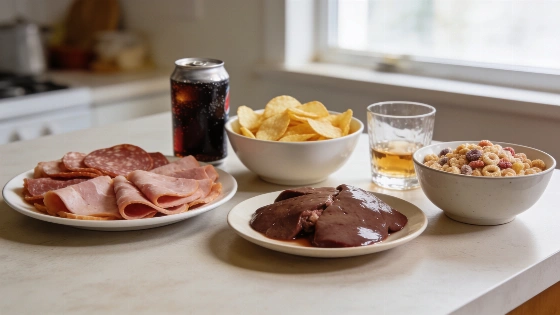
Most people think their bones are safe if they avoid obvious risks, but the real danger often comes from what they eat every day. Bone loss rarely makes the news, yet it's often the result of routine dietary habits that seem harmless until the effects add up.
For adults over 50, clinical guidelines recommend about 700 mg of calcium daily, but excess sodium, caffeine, and soft drinks can interfere with absorption-details often missing from Supplement Facts panels.
High-sodium foods are a major culprit. When you eat too much salt, your body flushes out extra sodium by excreting more calcium in urine. This means bones have to give up some of their own calcium, and the effect increases with every 2,300 milligrams of sodium-costing about 40 milligrams of calcium each time. Salt isn't just in the shaker; it's found in bread, deli meats, canned soups, frozen meals, and fast food. Many people eat more than the recommended 2,300 milligrams per day without realizing it.
Sugar is another problem. High sugar intake disrupts calcium absorption, fuels inflammation, and interferes with the cells that repair bone. The issue goes beyond desserts and candy-sugar is hidden in sauces, flavored yogurts, cereals, energy bars, and drinks that don't seem like obvious threats. Replacing processed sweets with whole fruit provides natural sugars along with vitamins, minerals, and fiber that support bone health.
Soft drinks do double damage. They contain sugar that triggers calcium loss and may also interfere with vitamin D, making it harder for the body to absorb calcium from food. The Framingham Osteoporosis Study, which looked at about 2,500 adults, found that cola drinks-not all carbonated beverages-were linked to lower bone mineral density in women. This is likely due to phosphoric acid, caffeine, and less milk in the diet. For anyone reading labels, this distinction matters.
Claims Check: While many protein shakes and meal replacements tout bone health benefits, only those with fully disclosed calcium and vitamin D dosages-aligned with clinical guidelines-can substantiate such claims. Proprietary blends or vague ingredient listings do not guarantee effective support for skeletal health.
Processed and fatty meats aren't just a heart issue. Diets high in these foods drive chronic inflammation, which research increasingly links to bone loss. People who eat a lot of animal protein often have lower bone density than those who choose plant-based proteins like beans, lentils, and tofu. Shifting toward plant-based options and lean meats can help reduce inflammation while still meeting protein needs.
Even foods high in vitamin A, usually seen as healthy, can cause problems if eaten in excess-especially from animal sources like beef liver. More than about three ounces of high-retinol foods may actually speed up bone breakdown. Getting vitamin A from a mix of sources, including plant-based beta carotene in carrots and sweet potatoes, helps avoid this risk without missing out on the nutrient.
It's not the occasional treat that puts bones at risk, but the steady, long-term consumption of these foods that drains calcium reserves and disrupts bone repair. The best defense is a mix of mindful eating, weight-bearing exercise, and enough calcium and vitamin D. The NIH Office of Dietary Supplements offers up-to-date guidance on daily calcium needs and supplement safety.
For anyone concerned about staying mobile and strong as they age, the takeaway is clear: bone health depends on daily choices at the table. Overlooking these habits can lead to problems that only show up when they're much harder to fix.